Diwali Dos and Don'ts: Essential Lakshmi Puja Rules, Common Mistakes, Safety Precautions and Important Traditions
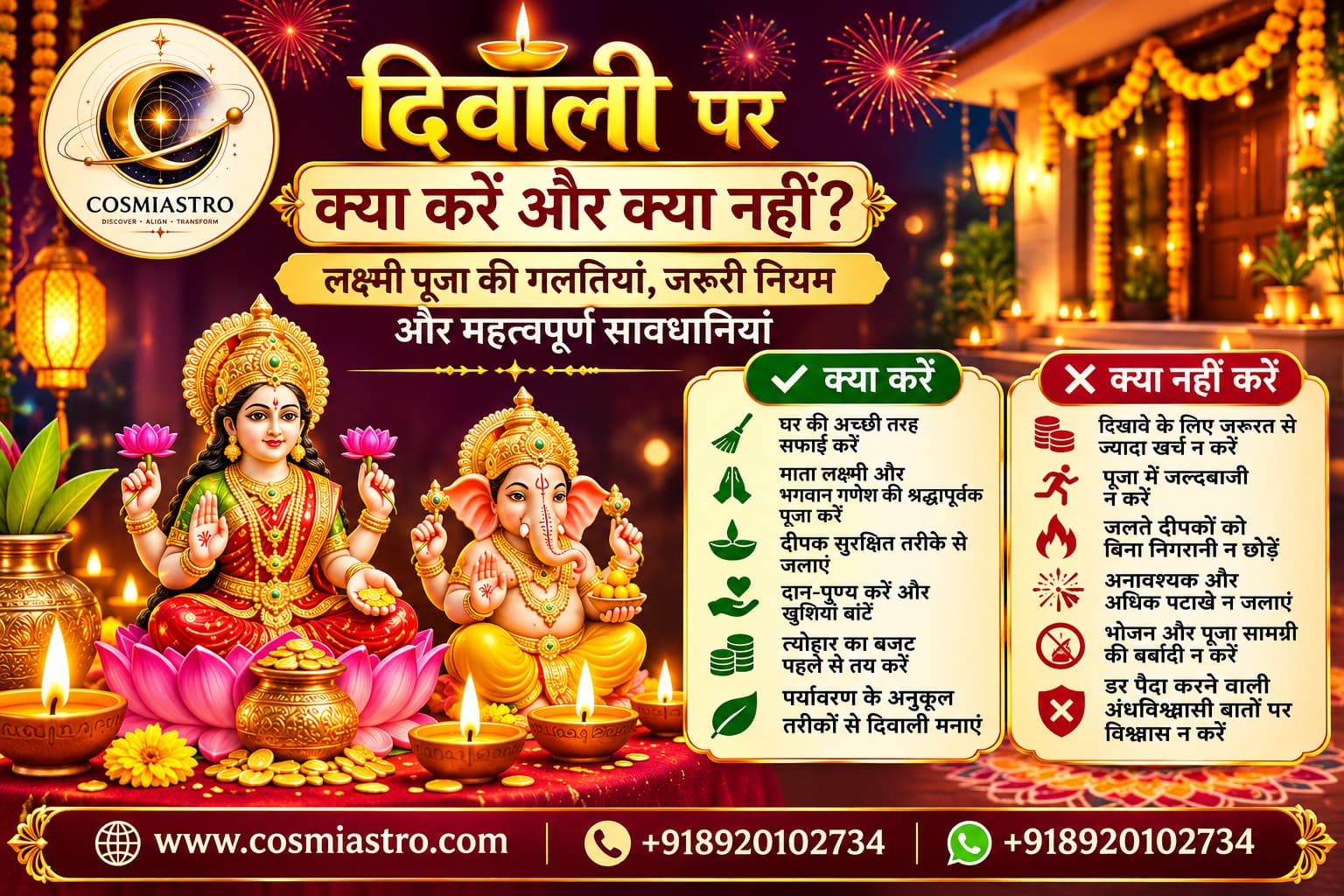
Diwali is one of the most celebrated Hindu festivals, symbolizing the victory of light over darkness, wisdom over ignorance, and hope over despair. Homes are decorated with beautiful rangoli, glowing diyas, flowers, and festive lights. Families gather to worship Goddess Lakshmi and Lord Ganesha, exchange gifts, prepare sweets, and celebrate new beginnings.
However, Diwali is not only about decorations, shopping, and celebrations. It is also a time for spiritual reflection, gratitude, cleanliness, generosity, and responsible living.
Many people have questions about the correct way to celebrate Diwali. What should you do before Lakshmi Puja? Which mistakes should you avoid? Is it necessary to buy expensive puja materials? Can you perform Lakshmi Puja without a priest? What precautions should you take while lighting diyas and decorating your home?
Understanding Diwali dos and don'ts can help you celebrate with greater confidence, devotion, and safety.
In this comprehensive Cosmiastro guide, we explain the important things to do and avoid during Diwali, common Lakshmi Puja mistakes, traditional beliefs, practical precautions, and frequently asked questions.
Religious customs differ across regions, communities, and families. The recommendations below describe common practices rather than compulsory rules for every Hindu household.
1. Why Are Diwali Dos and Don'ts Important?
Diwali has deep spiritual, cultural, and social significance.
Goddess Lakshmi is traditionally associated with prosperity, abundance, and good fortune. Lord Ganesha represents wisdom, auspicious beginnings, and the removal of obstacles.
Worshipping these deities together symbolizes the importance of combining prosperity with good judgment.
The customs followed during Diwali also communicate valuable everyday lessons.
Cleaning the home encourages hygiene and organization.
Lighting diyas represents knowledge and hope.
Sharing sweets promotes togetherness.
Offering charity encourages compassion.
Praying with family strengthens emotional connections.
Following appropriate precautions helps ensure that celebrations remain safe for children, older adults, pets, and the wider community.
The purpose of Diwali rules should therefore be understood through devotion, cultural meaning, and practical responsibility rather than fear of punishment or guaranteed financial rewards.
2. Important Things to Do Before Diwali
Do 1: Clean and Organize Your Home
Cleaning is one of the most widely followed Diwali traditions.
Many families believe that a clean and welcoming home symbolizes readiness to receive Goddess Lakshmi's blessings.
Begin by removing unnecessary clutter, organizing household items, and cleaning commonly used areas.
Pay attention to the main entrance, kitchen, living room, and worship space.
You do not need to replace useful belongings or purchase expensive decorations. Cleanliness and organization matter more than unnecessary spending.
Do 2: Prepare Your Puja Area in Advance
Choose a clean, peaceful, and well-ventilated location for Lakshmi-Ganesha Puja.
Place a stable table or chowki in the selected area and cover it with a clean cloth.
Arrange the idols or pictures of Goddess Lakshmi and Lord Ganesha respectfully.
Keep flowers, fruits, sweets, diyas, incense, and other customary materials nearby.
Preparing everything in advance helps prevent confusion during the worship ceremony.
Do 3: Check the Local Lakshmi Puja Muhurat
Diwali worship is commonly performed during the evening, particularly during the traditionally preferred Pradosh period.
However, the exact Lakshmi Puja muhurat depends on the festival date, location, sunset, and Panchang calculations.
Check a reliable local Panchang rather than assuming that a time published for another city applies to your location.
If you cannot perform the ceremony at the preferred time, follow your family tradition or seek guidance from a knowledgeable priest.
Do 4: Prepare a Practical Celebration Budget
Diwali should be a joyful occasion, not a reason for financial stress.
Plan expenses for food, decorations, gifts, travel, and worship materials.
Avoid borrowing money merely to create an elaborate celebration.
Simple, meaningful arrangements can be just as spiritually significant as expensive ones.
Do 5: Plan for Fire and Electrical Safety
Before Diwali evening, check decorative lights, extension cords, and electrical sockets.
Replace damaged wiring and avoid overloading power outlets.
Choose safe places for diyas and candles, especially if children or pets are present.
Keep exits and walking paths clear.
3. Essential Dos During Lakshmi-Ganesha Puja
Do 6: Begin Worship With Cleanliness and Respect
Wash your hands before handling puja materials.
Wear clean and comfortable clothes.
Keep the worship area tidy and avoid placing unrelated items on the altar.
These practices reflect respect and help maintain hygiene.
Do 7: Remember Lord Ganesha During the Puja
In many Hindu traditions, Lord Ganesha is worshipped before other deities because he represents wisdom and auspicious beginnings.
A commonly recited Ganesha mantra is:
ॐ गं गणपतये नमः।
Om Gam Ganapataye Namah.
You may chant the mantra according to your family tradition.
Do 8: Worship Goddess Lakshmi With Devotion
Goddess Lakshmi is the principal deity worshipped in many households during Diwali.
Offer flowers, fruits, sweets, and other suitable items according to your customs.
A commonly recited Lakshmi mantra is:
ॐ श्रीं महालक्ष्म्यै नमः।
Om Shreem Mahalakshmyai Namah.
The number of repetitions may vary. Some devotees chant 11, 21, or 108 times.
Sincerity and attention are more important than rushing through a particular count.
Do 9: Use Fresh and Appropriate Offerings
Choose fresh flowers, clean water, and hygienically prepared food.
Lotus flowers are traditionally associated with Goddess Lakshmi, but they are not compulsory.
If lotus flowers are unavailable, follow your household's accepted alternatives.
Use offerings that are affordable, accessible, and suitable for your tradition.
Do 10: Light Diyas Safely
Lighting diyas is central to the Diwali celebration.
Clay diyas and traditional lamps symbolize the victory of light over darkness.
Place them on heat-resistant, stable surfaces.
Keep flames away from curtains, furniture, decorations, and electrical wires.
Never leave burning lamps unattended, even during worship.
Do 11: Perform Aarti Calmly
Aarti is an important devotional practice in many Hindu households.
Use a suitable lamp or aarti plate and move it carefully.
Avoid overcrowding around an open flame.
If someone has breathing difficulties, consider limiting incense and smoke.
Do 12: Share Prasad and Express Gratitude
After the puja, distribute prasad among family members.
Sharing food symbolizes gratitude, generosity, and togetherness.
Ensure that offerings remain safe to eat and are stored appropriately.
4. Important Things You Should Not Do on Diwali
Don't 1: Do Not Treat Religious Customs as Guaranteed Wealth Remedies
Diwali worship is an expression of devotion.
It is not a scientifically established method for obtaining money, winning lotteries, removing debt, or guaranteeing business success.
Avoid anyone who promises certain financial results in exchange for expensive rituals.
Don't 2: Do Not Perform Puja in a Hurry
Rushing can lead to forgotten materials, unsafe flames, and unnecessary stress.
Prepare the altar beforehand and allow sufficient time for prayers.
A short, focused ceremony is preferable to an elaborate ritual performed carelessly.
Don't 3: Do Not Use Damaged or Unsafe Puja Equipment
Avoid cracked oil lamps, unstable candleholders, damaged electrical lights, and loose wiring.
Inspect reusable decorations before placing them near flames.
Safety should never be compromised for appearance.
Don't 4: Do Not Waste Food or Puja Materials
Avoid preparing excessive quantities of prasad that may spoil.
Use flowers, fruits, and other materials thoughtfully.
Dispose of used offerings responsibly and follow local waste-management rules.
Don't 5: Do Not Overspend Because of Social Pressure
Expensive idols, jewelry, clothing, or elaborate decorations are not compulsory for meaningful Diwali worship.
Celebrate within your financial capacity.
Avoid comparing your celebration with those of relatives, neighbors, or social media influencers.
Don't 6: Do Not Create Unnecessary Noise or Pollution
Fireworks can contribute to air pollution, noise, injuries, and distress among vulnerable people and animals.
Follow applicable local regulations.
Consider quieter and less polluting alternatives such as rangoli, decorative lights, family gatherings, and charitable activities.
Don't 7: Do Not Ignore Children, Older Adults, or Pets
Open flames, hot utensils, loose wires, and fireworks create hazards.
Supervise children and ensure that pets have a quiet, secure place.
Be considerate of people with respiratory conditions, hearing sensitivity, or mobility difficulties.
Don't 8: Do Not Allow Fear-Based Superstitions to Control Your Celebration
Different households follow different customs.
Missing a particular flower, diya count, or decorative item does not establish that misfortune will follow.
Respect traditions without turning them into sources of anxiety.
5. Common Lakshmi Puja Mistakes and How to Avoid Them
Mistake 1: Following an Incorrect Muhurat
A frequently made mistake is copying a puja time from a different city or year.
Because the preferred worship period depends on local Panchang calculations, always verify the date and time for your location.
Mistake 2: Beginning Without Preparing the Materials
Searching for flowers, matches, sweets, or other items during the ceremony can create confusion.
Prepare a simple checklist before starting.
Mistake 3: Placing Diyas Too Close to Decorations
Flowers, fabric, paper rangoli accessories, and festive decorations may catch fire.
Keep sufficient distance between open flames and combustible materials.
Mistake 4: Using Excessive Incense in a Closed Room
Incense smoke may irritate the eyes and respiratory system.
Maintain ventilation and reduce smoke exposure, especially around sensitive individuals.
Mistake 5: Believing Every Household Must Follow the Same Procedure
Lakshmi Puja customs vary across India.
Some families include Kubera Puja, account-book worship, or additional regional rituals.
Follow your family tradition rather than assuming that every online checklist is universally applicable.
Mistake 6: Focusing Only on Material Wealth
The symbolism of Lakshmi-Ganesha Puja includes prosperity accompanied by wisdom.
Remember to pray for health, peace, ethical conduct, good relationships, and responsible decision-making.
Mistake 7: Ignoring Food Hygiene
Prasad prepared with dairy, nuts, or other perishable ingredients requires proper handling.
Pay attention to allergies and storage conditions.
Mistake 8: Forgetting Fire Safety After Puja
The ceremony may be finished, but diyas can continue burning.
Check every flame before leaving the room or going to sleep.
6. Step-by-Step Lakshmi-Ganesha Puja Preparation Checklist
Step 1: Select a Clean Puja Location
Choose a stable, uncluttered space away from flammable materials.
Step 2: Prepare the Chowki
Cover a clean table or platform with a suitable cloth.
Step 3: Arrange the Deities
Place Goddess Lakshmi and Lord Ganesha respectfully according to your family's tradition.
Step 4: Gather the Offerings
Prepare flowers, fruits, sweets, water, rice, kumkum, and other customary materials.
Step 5: Check the Puja Time
Confirm the preferred muhurat using a local Panchang.
Step 6: Begin With Prayer
Remember Lord Ganesha and offer prayers according to your tradition.
Step 7: Worship Goddess Lakshmi
Offer flowers and other customary materials while chanting prayers or mantras.
Step 8: Perform Aarti
Use a safely positioned lamp and avoid crowding around the flame.
Step 9: Distribute Prasad
Share the offerings respectfully with family members.
Step 10: Secure the Worship Area
Extinguish flames when appropriate, allow lamps to cool, and clean the area safely.
This is a simplified general guide. Detailed rituals may differ according to family and regional customs.
7. Diwali Safety Precautions Every Family Should Follow
Fire Safety
Keep a suitable fire extinguisher available where practical.
Place diyas on nonflammable surfaces.
Never move a burning oil lamp carelessly.
Keep children away from hot lamps.
Do not use water on a cooking-oil fire. Follow appropriate fire-safety guidance for the type of fire involved.
Electrical Safety
Purchase decorative lights from reputable sellers.
Check plugs and cables before use.
Do not overload extension boards.
Keep indoor-only lights away from rain and moisture.
Switch off unnecessary electrical decorations before sleeping.
Firework Safety
The safest way to reduce firework-related injuries and pollution is to avoid personal fireworks.
Where fireworks are legally permitted, follow all local rules and manufacturer instructions.
Never allow children to handle fireworks unsupervised.
Do not attempt to relight malfunctioning fireworks.
Keep fireworks away from buildings, vehicles, trees, and crowded spaces.
Health and Environmental Precautions
Avoid excessive smoke and loud noise.
Be considerate of people with asthma or other respiratory concerns.
Choose reusable decorations when possible.
Dispose of waste responsibly.
Avoid burning plastic or other household waste.
Pet Safety
Keep pets indoors in a secure, comfortable area if loud celebrations are expected.
Ensure they have access to water and familiar resting places.
Do not force frightened animals to participate in festivities.
8. Traditional Diwali Beliefs: What Is Optional and What Is Essential?
Several popular Diwali beliefs concern the number of diyas, the direction of worship, the color of clothing, the arrangement of idols, and the use of particular flowers.
These customs are not identical across every Hindu community.
For example, some families prefer specific diya counts, while others light only a few lamps.
Some communities observe additional rituals related to business accounts, ancestors, or Lord Kubera.
The important distinction is between a traditional preference and a universal requirement.
There is no need to create fear around missing an optional ritual item.
For a meaningful celebration, prioritize cleanliness, respectful worship, family harmony, generosity, and safety.
9. Diwali Dos and Don'ts for Wealth and Financial Well-Being
Diwali is often associated with financial prosperity.
A useful way to honor this symbolism is to combine spiritual practices with responsible money management.
Do review your household budget.
Do identify unnecessary expenses.
Do consider establishing an emergency fund.
Do set realistic savings goals.
Do keep important financial documents organized.
Do give charity within your means.
Do not borrow money for unnecessary celebrations.
Do not trust guaranteed-return investment claims.
Do not make impulsive financial decisions because of festival excitement.
Do not substitute rituals for debt management or professional financial advice.
Prosperity becomes more sustainable when financial discipline accompanies celebration.
10. How to Celebrate an Eco-Friendly and Meaningful Diwali
A meaningful Diwali does not require excessive consumption.
Choose reusable decorations and locally available materials when practical.
Use energy-efficient decorative lights responsibly.
Consider sharing homemade sweets in reusable containers.
Support local artisans and small businesses when your budget permits.
Avoid unnecessary plastic packaging.
Spend quality time with family members.
Help people who may be celebrating alone.
Donate useful essentials through trustworthy channels.
These actions can make Diwali more inclusive, thoughtful, and environmentally responsible.
11. Frequently Asked Questions About Diwali Dos and Don'ts (FAQs)
Q1. What should we do first on Diwali?
Answer: Many families begin with cleaning, bathing, decorating the home, and preparing for Lakshmi-Ganesha Puja. The exact sequence varies by tradition.
Q2. What should we avoid during Lakshmi Puja?
Answer: Avoid rushing, unsafe flames, excessive smoke, unhygienic offerings, and fear-based assumptions about rituals.
Q3. Is cleaning the house compulsory before Diwali?
Answer: Cleaning is a widely followed tradition associated with welcoming auspiciousness. Its practical benefits include hygiene and organization.
Q4. Can Lakshmi Puja be performed without a priest?
Answer: Yes. Many households perform simple Lakshmi-Ganesha Puja independently according to family customs.
Q5. Is it necessary to buy a new Lakshmi-Ganesha idol every year?
Answer: No universal rule requires purchasing new idols annually. Follow your family's tradition.
Q6. Which mantra can be chanted during Lakshmi Puja?
Answer: Om Shreem Mahalakshmyai Namah is a commonly used devotional mantra.
Q7. Is it compulsory to chant a mantra 108 times?
Answer: No. The number of repetitions depends on tradition, time, and personal ability.
Q8. Can we perform Lakshmi Puja without lotus flowers?
Answer: Yes. Other suitable flowers may be offered according to family customs.
Q9. How many diyas should we light on Diwali?
Answer: There is no single mandatory number for every household. Light as many as you can manage safely.
Q10. What is the biggest mistake during Diwali Puja?
Answer: A major practical mistake is neglecting fire safety. Another is assuming that a religious ritual guarantees financial results.
Q11. Should we avoid spending money on Diwali?
Answer: Necessary and planned spending is reasonable. Avoid overspending, unnecessary borrowing, and impulsive purchases.
Q12. Is it wrong to celebrate Diwali without fireworks?
Answer: No. Fireworks are not required for meaningful Lakshmi-Ganesha worship.
Q13. Can children participate in Lakshmi Puja?
Answer: Yes. Children can participate in age-appropriate activities under adult supervision.
Q14. Can we perform Diwali Puja in a small apartment?
Answer: Yes. A clean, safe, compact worship area is sufficient for simple household prayers.
Q15. Should we keep diyas burning all night?
Answer: Never leave open flames unattended. Fire safety takes priority over maintaining a flame overnight.
Q16. Is donating on Diwali considered good?
Answer: Charity is widely regarded as a meaningful practice that encourages generosity and supports people in need.
Q17. Can we perform Diwali Puja if some materials are unavailable?
Answer: Many families adapt simple worship to the materials they have. Follow your tradition without unnecessary anxiety.
Q18. Are all Diwali dos and don'ts based on astrology?
Answer: No. Some are religious customs, others are cultural practices, and many are practical safety recommendations.
Q19. Can Diwali Puja guarantee wealth or remove financial problems?
Answer: No. Religious worship does not guarantee financial outcomes. Budgeting, responsible decisions, and qualified advice remain important.
Q20. Where can I learn more about Diwali traditions and astrology?
Answer: You can visit www.cosmiastro.com or contact Cosmiastro by phone or WhatsApp to enquire about available astrology guidance.
12. Contact Cosmiastro for Diwali Astrology Guidance
Diwali is an opportunity to welcome hope, gratitude, spiritual reflection, and positive new beginnings.
If you are interested in traditional Vedic astrology, horoscope analysis, planetary symbolism, festival customs, or Diwali-related astrological guidance, Cosmiastro can be contacted through the details below.
13. Conclusion: Celebrate Diwali With Devotion, Wisdom and Safety
Diwali is a celebration of light, but its deeper meaning goes beyond lamps and decorations.
The most important Diwali dos include maintaining cleanliness, preparing carefully for Lakshmi-Ganesha Puja, respecting family traditions, sharing with others, and celebrating responsibly.
Equally important are the things you should avoid.
Do not rush through worship, overspend, create unnecessary pollution, ignore fire safety, or believe promises of guaranteed wealth through rituals.
Remember that different families may follow different puja methods. A meaningful Diwali does not depend on expensive arrangements or strict adherence to every popular custom.
Celebrate with sincerity, gratitude, compassion, and practical awareness.
May Goddess Lakshmi's traditional symbolism inspire prosperity with responsibility, and may Lord Ganesha's blessings remind us to pursue wisdom in every decision.
Cosmiastro wishes you and your family a joyful, peaceful, safe, and prosperous Diwali!
Disclaimer: This article discusses Hindu religious traditions, cultural beliefs, and general safety practices for educational purposes. Customs vary by family and region. Spiritual practices do not guarantee financial success, health improvements, or any other specific outcome. Follow applicable local regulations and seek qualified professional advice when needed.