Diwali 2026: 11 Powerful Astrological Remedies for Wealth, Prosperity, Good Luck and Goddess Lakshmi's Blessings
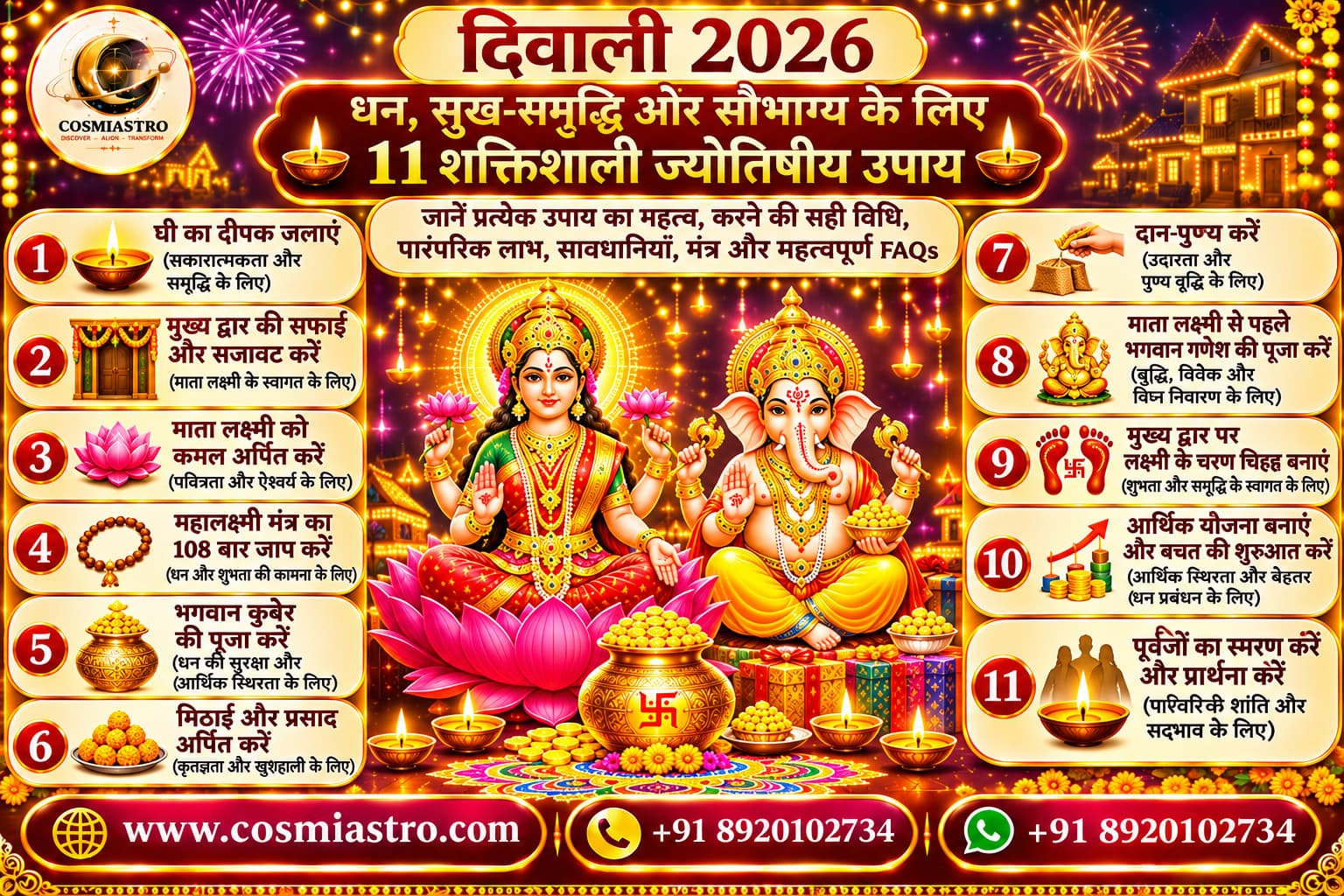
Diwali 2026 will be celebrated on Sunday, November 8, 2026. One of the most important festivals in Hinduism, Diwali symbolizes the victory of light over darkness, wisdom over ignorance, and goodness over negativity.
During Diwali, devotees worship Goddess Lakshmi, Lord Ganesha, and, in some traditions, Lord Kubera. Families clean their homes, light diyas, decorate entrances, prepare sweets, perform prayers, and share happiness with loved ones.
Diwali is also associated with traditional spiritual and astrological remedies for prosperity, good fortune, household harmony, and financial well-being.
But which remedies should you perform on Diwali? Why are these remedies considered important? How are they performed, and what benefits are traditionally associated with them?
In this comprehensive Cosmiastro guide, discover 11 powerful Diwali 2026 remedies, their religious significance, step-by-step procedures, traditional benefits, important precautions, mantras, auspicious timings, and 20 frequently asked questions.
These remedies are based on religious customs and traditional astrological beliefs. They do not guarantee wealth, financial success, or any particular outcome.
1. Diwali 2026 Date and Lakshmi Puja Shubh Muhurat
Diwali 2026 Date: Sunday, November 8, 2026
Lakshmi Puja Muhurat (New Delhi): 5:54 PM to 7:50 PM
Pradosh Kaal: 5:31 PM to 8:09 PM
Vrishabha Kaal: 5:54 PM to 7:50 PM
Amavasya Tithi Begins: November 8, 2026, at 11:27 AM
Amavasya Tithi Ends: November 9, 2026, at 12:31 PM
Diwali is celebrated during Kartik Amavasya, which is traditionally associated with Goddess Lakshmi's worship.
The timings above are for New Delhi in Indian Standard Time. Puja muhurats may vary depending on your city, so verify the timing with a reliable local Panchang.
2. Why Are Astrological Remedies Performed on Diwali?
Diwali is regarded as an auspicious occasion for worship, spiritual reflection, generosity, purification, and new beginnings.
Goddess Lakshmi symbolizes prosperity, abundance, and good fortune.
Lord Ganesha represents wisdom, discernment, and auspicious beginnings.
Lord Kubera is traditionally regarded as the guardian of wealth.
Devotees perform Diwali remedies to express gratitude, seek blessings, pray for financial stability, and welcome positivity into their lives.
Many practices also have symbolic meanings. Cleaning represents removing disorder, lighting lamps represents overcoming darkness, and charity represents sharing prosperity.
The importance of these remedies lies in faith, intention, discipline, and ethical conduct rather than guaranteed material rewards.
3. Eleven Powerful Diwali 2026 Remedies for Wealth and Prosperity
Remedy 1: Light a Ghee Diya for Positivity and Prosperity
Why Is This Remedy Performed?
Lighting diyas is one of the most important Diwali traditions.
A burning lamp symbolizes knowledge, hope, purity, and the victory of light over darkness.
In many Hindu households, ghee diyas are used during Lakshmi Puja as a devotional offering.
How to Perform This Remedy
1. Clean your worship area before the evening puja.
2. Take a clean clay or metal diya.
3. Add an appropriate amount of ghee.
4. Place a cotton wick inside.
5. Light the diya during Lakshmi-Ganesha Puja.
6. Pray for wisdom, happiness, peace, and family well-being.
Traditional Benefits
Lighting a diya is associated with welcoming auspiciousness and symbolically removing darkness.
It helps create a peaceful atmosphere for worship and encourages gratitude and spiritual reflection.
Important Precaution
Keep burning diyas away from curtains, paper decorations, children, and pets. Never leave a flame unattended.
Remedy 2: Clean and Decorate Your Main Entrance
Why Is This Remedy Performed?
The main entrance is traditionally considered a place of welcome.
Many families believe that a clean, decorated entrance symbolizes readiness to welcome Goddess Lakshmi and auspicious blessings.
Cleaning also has practical benefits because it improves hygiene and household organization.
How to Perform This Remedy
1. Clean the entrance and surrounding area.
2. Remove clutter and unnecessary objects.
3. Create a traditional rangoli.
4. Decorate the doorway with flowers or a toran.
5. Place diyas in safe locations.
6. Offer prayers for household harmony and prosperity.
Traditional Benefits
This practice symbolizes welcoming positive beginnings, prosperity, and happiness.
It also promotes cleanliness, organization, and a festive atmosphere.
Important Precaution
Do not block entrances or emergency exits with decorations. Avoid placing diyas where people might trip.
Remedy 3: Offer Lotus Flowers to Goddess Lakshmi
Why Is This Remedy Performed?
The lotus is closely associated with Goddess Lakshmi in Hindu religious imagery.
It symbolizes purity, resilience, spiritual development, and prosperity.
Offering a lotus flower expresses devotion and reminds worshippers that wealth should be accompanied by ethical conduct.
How to Perform This Remedy
1. Prepare a clean puja platform.
2. Place an image or idol of Goddess Lakshmi.
3. Offer fresh lotus flowers if available.
4. Light a diya safely.
5. Chant a Lakshmi mantra.
6. Pray for prosperity, wisdom, and contentment.
Traditional Benefits
The lotus symbolizes spiritual purity and growth.
Offering it is a traditional expression of devotion and gratitude.
It also reinforces the importance of maintaining good values while pursuing material success.
Important Precaution
Lotus flowers are not compulsory. Other suitable flowers may be offered according to family customs.
Remedy 4: Chant the Mahalakshmi Mantra 108 Times
Why Is This Remedy Performed?
Mantra chanting is an important devotional practice in Hindu traditions.
The Mahalakshmi mantra is associated with Goddess Lakshmi and is commonly recited during Diwali.
Repeating a mantra with attention may help devotees develop concentration and spiritual discipline.
Mahalakshmi Mantra
ॐ श्रीं महालक्ष्म्यै नमः।
Om Shreem Mahalakshmyai Namah.
How to Perform This Remedy
1. Sit in a clean, quiet place.
2. Focus your attention on the worship altar.
3. Light a diya safely.
4. Sit calmly for a few moments.
5. Chant the mantra 11, 21, or 108 times.
6. Conclude with a prayer of gratitude.
Traditional Benefits
This practice is associated with devotion to Goddess Lakshmi and prayers for prosperity.
It also encourages concentration, mindfulness, and spiritual consistency.
Important Precaution
Chanting 108 times is a customary practice in many traditions, but it is not compulsory for everyone.
Remedy 5: Worship Lord Kubera for Financial Stability
Why Is This Remedy Performed?
Lord Kubera is traditionally regarded as the guardian and treasurer of wealth.
His worship represents the importance of protecting resources and managing money responsibly.
It reminds devotees that saving and preserving wealth are as important as earning it.
How to Perform This Remedy
1. Place a picture or idol of Lord Kubera near your altar.
2. Offer flowers and customary puja materials.
3. Light a diya safely.
4. Recite a traditional Kubera mantra.
5. Pray for stability and wise financial decisions.
6. Review your savings and spending habits afterward.
Kubera Mantra
ॐ यक्षाय कुबेराय वैश्रवणाय धनधान्याधिपतये धनधान्यसमृद्धिं मे देहि दापय स्वाहा॥
Traditional Benefits
Kubera worship symbolizes responsible wealth management and gratitude for financial resources.
It is traditionally associated with prayers for abundance and financial stability.
Important Precaution
This practice does not guarantee income, investment returns, or debt repayment.
Remedy 6: Offer Sweets and Prasad During Lakshmi-Ganesha Puja
Why Is This Remedy Performed?
Offering food to deities is a common Hindu devotional tradition.
The offering, known as naivedya, expresses gratitude for nourishment and abundance.
After worship, the offering is distributed as prasad, encouraging sharing and togetherness.
How to Perform This Remedy
1. Prepare or purchase fresh, hygienic sweets.
2. Place them in a clean dish.
3. Offer them during Lakshmi-Ganesha Puja.
4. Recite prayers according to your tradition.
5. Distribute the prasad among family members.
6. Share food with others when possible.
Traditional Benefits
This practice encourages gratitude, generosity, and family participation.
It symbolizes goodwill and the importance of sharing blessings.
Important Precaution
Follow food-safety practices and dietary requirements. Avoid waste and unnecessary expenditure.
Remedy 7: Perform Charity and Share Your Prosperity
Why Is This Remedy Performed?
Charitable giving, or daan, has an important place in Hindu religious and ethical traditions.
Diwali celebrates abundance, making it a meaningful occasion to support people who need essential resources.
Charity teaches that prosperity becomes more meaningful when shared.
How to Perform This Remedy
1. Identify a genuine need in your community.
2. Select useful items such as food, clothing, or essential supplies.
3. Donate within your financial capacity.
4. Respect the dignity of recipients.
5. Give without expecting rewards.
Traditional Benefits
Charity promotes compassion, generosity, and social responsibility.
It provides practical assistance and strengthens community relationships.
Important Precaution
Use trustworthy donation channels. Do not borrow money merely to fulfill a perceived religious obligation.
Remedy 8: Worship Lord Ganesha Before Goddess Lakshmi
Why Is This Remedy Performed?
Lord Ganesha is traditionally worshipped at the beginning of many Hindu ceremonies.
He symbolizes wisdom, good judgment, and the removal of obstacles.
Worshipping Ganesha alongside Lakshmi represents the idea that prosperity should be guided by intelligence and responsibility.
How to Perform This Remedy
1. Prepare your worship altar.
2. Begin by remembering Lord Ganesha.
3. Offer flowers and customary puja materials.
4. Chant the Ganesha mantra.
5. Continue with Goddess Lakshmi's worship.
6. Pray for wisdom and ethical decision-making.
Ganesha Mantra
ॐ गं गणपतये नमः।
Om Gam Ganapataye Namah.
Traditional Benefits
Ganesha worship symbolizes auspicious beginnings, clarity, and wisdom.
It encourages devotees to make thoughtful decisions in personal and financial matters.
Important Precaution
The order of worship and offerings may vary by family or regional tradition.
Remedy 9: Place Traditional Lakshmi Footprints at the Entrance
Why Is This Remedy Performed?
Decorative footprints representing Goddess Lakshmi are used in some Hindu households during Diwali.
They symbolize welcoming divine blessings into the home.
This practice also helps preserve cultural and family traditions.
How to Perform This Remedy
1. Clean and dry the entrance floor.
2. Use traditional designs or removable decorative footprints.
3. Arrange them according to your family's custom.
4. Decorate the surrounding area with rangoli or flowers.
5. Pray for household well-being.
Traditional Benefits
Lakshmi footprints symbolize auspiciousness, hospitality, and devotion.
They create a festive atmosphere and connect families with inherited traditions.
Important Precaution
Avoid slippery materials and decorations that could cause falls.
Remedy 10: Start a Financial Planning and Savings Routine
Why Is This Remedy Performed?
Diwali is associated with renewal and new beginnings.
Some business communities also begin a new accounting period around Diwali.
This makes the festival a suitable opportunity to review finances and establish responsible money-management habits.
Unlike symbolic religious rituals, practical financial planning can directly support better budgeting.
How to Perform This Remedy
1. Review monthly income and essential expenses.
2. List outstanding debts and payment dates.
3. Identify unnecessary spending.
4. Set a realistic savings target.
5. Consider building an emergency fund.
6. Establish achievable financial goals.
Practical Benefits
Financial planning improves awareness of income and expenses.
It helps identify avoidable costs and encourages savings discipline.
Following a realistic plan may also reduce financial stress.
Important Precaution
Seek qualified financial advice for investments, debt restructuring, or complex financial decisions.
Remedy 11: Remember Your Ancestors and Pray for Family Harmony
Why Is This Remedy Performed?
Respecting ancestors is an important part of many Indian family traditions.
Some households include prayers for departed relatives during the Diwali period.
These practices express gratitude, remembrance, and respect for previous generations.
How to Perform This Remedy
1. Follow your family's established religious custom.
2. Choose a clean and safe place for prayer.
3. Light a diya if this is part of your tradition.
4. Remember departed loved ones respectfully.
5. Pray for peace and family harmony.
6. Spend meaningful time with living relatives.
Traditional Benefits
This practice encourages gratitude, remembrance, and emotional connection.
It helps preserve family heritage and symbolizes prayers for peace.
Important Precaution
Ancestor-related rituals are not compulsory Diwali practices for every household.
4. Essential Puja Materials for Diwali 2026 Remedies
Depending on your chosen remedies, you may need the following items:
1. Goddess Lakshmi and Lord Ganesha idols or pictures
2. Lord Kubera's image, if part of your tradition
3. Clean worship cloth
4. Clay or metal diyas
5. Cotton wicks
6. Ghee or suitable lamp oil
7. Fresh flowers and lotus flowers, if available
8. Kumkum, turmeric, and rice
9. Incense and aarti materials
10. Fruits, sweets, and prasad
11. Rangoli materials
12. A clean offering plate
13. A mantra mala, if desired
Not every item is compulsory. Many households perform meaningful worship with simple, readily available materials.
5. Best Time to Perform Diwali 2026 Remedies
The ideal time depends on the activity.
Home cleaning, decorating, charitable donations, and financial planning can be completed during the day.
Lakshmi-Ganesha Puja, mantra chanting, and devotional offerings are commonly performed during the evening worship period.
For New Delhi, the Lakshmi Puja Muhurat on November 8, 2026, is approximately 5:54 PM to 7:50 PM.
Consult a reliable local Panchang for city-specific timings.
6. Common Mistakes to Avoid During Diwali Remedies
Avoid believing that any ritual guarantees money or financial success.
Do not spend more than you can afford on worship materials.
Avoid performing unfamiliar rituals without understanding their meaning.
Never leave burning diyas unattended.
Do not place flames near flammable decorations.
Avoid treating charity as a transaction performed to receive rewards.
Respect your family's customs and beliefs.
Do not replace practical financial planning with promises of miraculous results.
Remember that devotion, gratitude, compassion, and responsibility are more important than expensive arrangements.
7. Frequently Asked Questions About Diwali 2026 Remedies (FAQs)
Q1. When is Diwali in 2026?
Answer: Diwali will be celebrated on Sunday, November 8, 2026, in India.
Q2. What is the best Diwali remedy for prosperity?
Answer: Lakshmi-Ganesha Puja, lighting diyas, charitable giving, and responsible financial planning are meaningful traditional or practical activities. No remedy guarantees wealth.
Q3. Which goddess is worshipped for prosperity on Diwali?
Answer: Goddess Lakshmi is the principal deity associated with prosperity and abundance during Diwali.
Q4. Why is Lord Ganesha worshipped with Goddess Lakshmi?
Answer: Lord Ganesha represents wisdom and auspicious beginnings, while Goddess Lakshmi represents prosperity. Their combined worship symbolizes prosperity guided by good judgment.
Q5. Which mantra is popular for Diwali Lakshmi Puja?
Answer: Om Shreem Mahalakshmyai Namah is a commonly recited Lakshmi mantra.
Q6. How many times should the Lakshmi mantra be chanted?
Answer: Many devotees chant 11, 21, or 108 times, depending on their traditions and ability.
Q7. Is it compulsory to light 11 or 21 diyas?
Answer: No. The number of diyas varies across families and traditions.
Q8. Can Diwali remedies be performed without a priest?
Answer: Yes. Many households perform simple devotional practices independently.
Q9. Why are lotus flowers offered to Goddess Lakshmi?
Answer: The lotus symbolizes purity, spiritual growth, and prosperity in Hindu iconography.
Q10. Is Kubera Puja necessary on Diwali?
Answer: No. Kubera Puja is followed in some traditions but is not compulsory for everyone.
Q11. Can Diwali remedies remove debt?
Answer: No religious remedy guarantees debt removal. Budgeting, repayment planning, and professional financial advice are practical approaches.
Q12. Why is the entrance decorated on Diwali?
Answer: A decorated entrance symbolizes hospitality, auspiciousness, and welcoming blessings.
Q13. Is charity important during Diwali?
Answer: Charity is a meaningful ethical and religious practice that supports generosity and community welfare.
Q14. Can I perform Diwali Puja without expensive materials?
Answer: Yes. Many families perform simple worship using readily available materials.
Q15. What is the importance of lighting a ghee diya?
Answer: In devotional traditions, a ghee diya symbolizes spiritual light, purity, and reverence.
Q16. Can I perform Diwali remedies during the daytime?
Answer: Activities such as cleaning, charity, and financial planning can be done during the day. Time-specific worship should follow local tradition.
Q17. Are Diwali remedies scientifically proven to attract money?
Answer: No. Religious remedies are faith-based practices and have not been scientifically established as methods of attracting wealth.
Q18. Can every zodiac sign perform these remedies?
Answer: Most of the general devotional practices described here are not restricted to a particular zodiac sign. Individual customs may differ.
Q19. What should I avoid during Diwali remedies?
Answer: Avoid unsafe flames, unnecessary expenses, fear-based claims, and practices that conflict with your beliefs or family traditions.
Q20. Where can I get traditional astrology guidance for Diwali 2026?
Answer: Visit Cosmiastro at www.cosmiastro.com or contact the team by phone or WhatsApp to enquire about available astrology consultation services.
8. Explore Diwali Astrology Guidance With Cosmiastro
Diwali offers an opportunity to reflect on prosperity, gratitude, family relationships, and personal growth.
If you are interested in Vedic astrology, horoscope analysis, traditional planetary symbolism, Lakshmi Puja customs, or festival-related astrological guidance, you can contact Cosmiastro.
9. Conclusion: Celebrate Diwali 2026 With Faith, Wisdom and Responsible Prosperity
Diwali 2026, celebrated on November 8, is an opportunity to welcome light, hope, and meaningful new beginnings.
The 11 remedies discussed in this guide represent different aspects of the festival.
Lighting diyas symbolizes the victory of light over darkness.
Cleaning and decorating the home represents renewal and hospitality.
Offering lotus flowers and chanting Lakshmi mantras expresses devotion.
Kubera worship reminds us to protect financial resources responsibly.
Offering sweets and performing charity encourages gratitude and generosity.
Ganesha worship highlights the importance of wisdom.
Traditional Lakshmi footprints symbolize welcoming auspiciousness.
Financial planning provides a practical foundation for managing money.
Remembering ancestors strengthens gratitude and family connections.
Together, these practices remind us that prosperity includes more than accumulating wealth. Wisdom, contentment, healthy relationships, generosity, and responsible living are equally important.
Celebrate Diwali with devotion, realistic expectations, financial discipline, environmental awareness, and kindness.
May the light of Diwali inspire peace, happiness, wisdom, and prosperity in your home.
Cosmiastro wishes you and your family a Happy and Prosperous Diwali 2026!
Disclaimer: The remedies and astrological interpretations in this article are based on traditional religious and cultural beliefs. They are provided for informational purposes and do not guarantee wealth, financial success, debt relief, health outcomes, or any other specific result. Consult qualified professionals for financial, medical, or legal matters.