Diwali Powerful Mantras: 15 Sacred Mantras for Goddess Lakshmi, Lord Ganesha, Wealth, Prosperity, Wisdom and Positive Energy
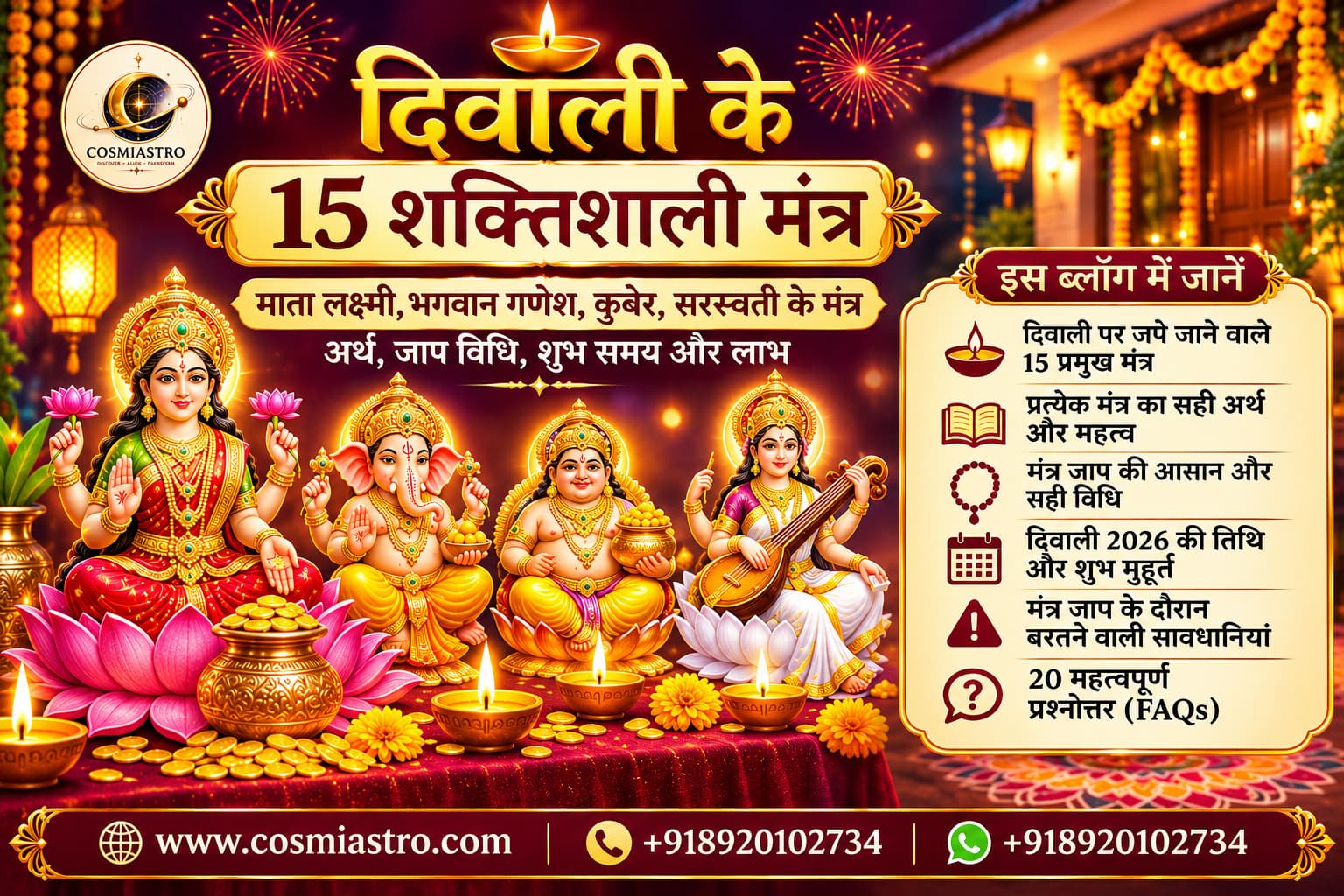
Diwali is one of the most spiritually significant festivals in Hinduism. Known as the Festival of Lights, it represents the victory of light over darkness, knowledge over ignorance, and hope over despair. Families celebrate this auspicious occasion by lighting diyas, decorating their homes, offering prayers, sharing sweets, and worshipping Goddess Lakshmi and Lord Ganesha.
One of the most meaningful aspects of Diwali worship is mantra chanting.
In Hindu devotional traditions, mantras are sacred sounds, words, or verses recited during prayer and meditation. They help devotees focus their minds, express gratitude, and connect with the spiritual meaning of worship.
During Diwali, many devotees chant mantras dedicated to Goddess Lakshmi, Lord Ganesha, Lord Kubera, Goddess Saraswati, and other revered deities.
But which mantras should you chant on Diwali? What do they mean? How many times should you repeat them? Is it necessary to chant 108 times? Can beginners perform mantra chanting at home? And what mistakes should you avoid?
In this comprehensive Cosmiastro guide, we explore 15 powerful Diwali mantras, their traditional significance, meanings, chanting procedures, recommended timings, precautions, and frequently asked questions.
The word “powerful” in this article refers to the spiritual importance these mantras hold within religious traditions. Mantra chanting does not guarantee wealth, financial success, healing, or any other specific outcome.
1. What Is the Spiritual Significance of Mantra Chanting on Diwali?
Diwali is traditionally associated with Goddess Lakshmi, who represents prosperity, abundance, and good fortune.
Lord Ganesha is worshipped as the deity of wisdom and auspicious beginnings.
Lord Kubera is traditionally regarded as the guardian of wealth.
Goddess Saraswati represents knowledge, learning, music, and wisdom.
Devotees chant mantras dedicated to these deities to express reverence and pray for personal well-being, harmony, and spiritual development.
Mantra chanting also provides an opportunity to slow down, concentrate, and reflect.
Repeating a sacred phrase with attention can create a structured devotional practice. Some people experience calmness and improved focus during such activities, although experiences differ.
The value of mantra chanting should not be measured only by material expectations. Its deeper significance lies in devotion, gratitude, self-discipline, and the intention behind prayer.
2. Diwali 2026 Date and Best Time for Mantra Chanting
Diwali in 2026 falls on Sunday, November 8, in India.
The main Lakshmi-Ganesha Puja is generally performed during the evening, with many traditions preferring the Pradosh period and an appropriate stable ascendant.
The precise puja muhurat depends on the location and local Panchang calculations.
Devotees may chant general prayers during the day, while mantras associated with Lakshmi Puja are often recited during the evening worship ceremony.
If you follow a specific family tradition, use its established procedure.
Mantra chanting is not necessarily restricted to one short time window. Many devotees also practice daily prayer.
3. Fifteen Powerful Diwali Mantras With Meaning and Chanting Methods
Mantra 1: Mahalakshmi Beej Mantra
Sanskrit Mantra
ॐ श्रीं महालक्ष्म्यै नमः॥
Transliteration
Om Shreem Mahalakshmyai Namah.
Meaning
“I offer my salutations to Goddess Mahalakshmi.”
The syllable Shreem is traditionally associated with Goddess Lakshmi and auspicious abundance in certain mantra traditions.
Why Is This Mantra Chanted?
This is a popular mantra used during Lakshmi worship.
Devotees recite it to express reverence and pray for prosperity, gratitude, and well-being.
How to Chant
Sit in a clean and peaceful place.
Focus your attention on Goddess Lakshmi.
Recite the mantra slowly and respectfully.
You may repeat it 11, 21, or 108 times according to your tradition.
Traditional Significance
The mantra symbolizes devotion to Goddess Lakshmi and prayers for auspiciousness.
Mantra 2: Lakshmi Gayatri Mantra
Sanskrit Mantra
ॐ महालक्ष्म्यै च विद्महे विष्णुपत्न्यै च धीमहि।
तन्नो लक्ष्मीः प्रचोदयात्॥
Transliteration
Om Mahalakshmyai Cha Vidmahe Vishnupatnyai Cha Dhimahi,
Tanno Lakshmih Prachodayat.
Meaning
“We contemplate Mahalakshmi, the consort of Lord Vishnu. May Goddess Lakshmi inspire and guide our understanding.”
Why Is This Mantra Chanted?
The Lakshmi Gayatri Mantra combines devotion with a prayer for illumination and guidance.
How to Chant
Sit comfortably before the worship altar.
Read the mantra carefully.
Recite it at a steady pace without rushing.
Conclude with a prayer for wisdom and responsible prosperity.
Traditional Significance
It represents reverence for Goddess Lakshmi and the importance of spiritual guidance.
Mantra 3: Simple Lakshmi Namaskar Mantra
Sanskrit Mantra
ॐ लक्ष्म्यै नमः॥
Transliteration
Om Lakshmyai Namah.
Meaning
“Salutations to Goddess Lakshmi.”
Why Is This Mantra Chanted?
This short prayer is suitable for beginners and those who prefer simple devotional worship.
How to Chant
Sit quietly.
Fold your hands in prayer.
Chant the mantra with attention.
Repeat according to your available time.
Traditional Significance
It offers a simple way to express gratitude and devotion.
Mantra 4: Lord Ganesha Beej Mantra
Sanskrit Mantra
ॐ गं गणपतये नमः॥
Transliteration
Om Gam Ganapataye Namah.
Meaning
“Salutations to Lord Ganapati.”
Why Is This Mantra Chanted?
Lord Ganesha is traditionally worshipped at the beginning of auspicious ceremonies.
His mantra is associated with wisdom, clarity, and prayers for the removal of obstacles.
How to Chant
Begin your Diwali prayer by remembering Lord Ganesha.
Offer flowers according to your tradition.
Chant the mantra 11 or 21 times, or another customary count.
Continue with Goddess Lakshmi's worship.
Traditional Significance
The mantra symbolizes auspicious beginnings and good judgment.
Mantra 5: Ganesha Vakratunda Mantra
Sanskrit Mantra
वक्रतुण्ड महाकाय सूर्यकोटि समप्रभ।
निर्विघ्नं कुरु मे देव सर्वकार्येषु सर्वदा॥
Transliteration
Vakratunda Mahakaya Suryakoti Samaprabha,
Nirvighnam Kuru Me Deva Sarvakaryeshu Sarvada.
Meaning
“O Lord with the curved trunk and mighty form, whose radiance resembles millions of suns, please help remove obstacles from my endeavors.”
Why Is This Mantra Chanted?
This popular Ganesha prayer is often recited before beginning important activities.
How to Chant
Recite it before Lakshmi Puja or other auspicious activities.
Understand the meaning while chanting.
Maintain a respectful and calm attitude.
Traditional Significance
It expresses a prayer for clarity, wisdom, and favorable beginnings.
Mantra 6: Lord Kubera Mantra
Sanskrit Mantra
ॐ यक्षाय कुबेराय वैश्रवणाय धनधान्याधिपतये।
धनधान्यसमृद्धिं मे देहि दापय स्वाहा॥
Transliteration
Om Yakshaya Kuberaya Vaishravanaya Dhanadhanyadhipataye,
Dhanadhanyasamriddhim Me Dehi Dapaya Svaha.
Meaning
“I offer reverence to Kubera, the guardian of wealth and resources, and pray for abundance and well-being.”
Why Is This Mantra Chanted?
Lord Kubera is traditionally associated with the guardianship of wealth.
His worship reminds devotees to value, protect, and manage resources responsibly.
How to Chant
Place a picture of Lord Kubera on your altar if this is part of your custom.
Offer flowers.
Recite the mantra carefully.
Pray for responsible financial decisions.
Traditional Significance
It represents prayers for financial stability and gratitude for available resources.
Important Note
Chanting this mantra does not guarantee income, investment returns, or debt relief.
Mantra 7: Kubera Beej Mantra
Sanskrit Mantra
ॐ कुबेराय नमः॥
Transliteration
Om Kuberaya Namah.
Meaning
“Salutations to Lord Kubera.”
Why Is This Mantra Chanted?
This is a simple devotional alternative for people who find longer Kubera mantras difficult to pronounce.
How to Chant
Sit comfortably.
Chant the mantra slowly.
Reflect on the importance of savings, discipline, and ethical wealth management.
Traditional Significance
It expresses reverence toward Lord Kubera.
Mantra 8: Saraswati Mantra for Knowledge and Wisdom
Sanskrit Mantra
ॐ ऐं सरस्वत्यै नमः॥
Transliteration
Om Aim Saraswatyai Namah.
Meaning
“Salutations to Goddess Saraswati.”
Why Is This Mantra Chanted?
Goddess Saraswati symbolizes learning, knowledge, creativity, and wisdom.
Although Diwali worship primarily focuses on Lakshmi and Ganesha in many households, some devotees also remember Saraswati.
How to Chant
Sit in a quiet place.
Focus on learning and personal development.
Recite the mantra respectfully.
Pray for clarity and a thoughtful mind.
Traditional Significance
It emphasizes that knowledge is an important form of prosperity.
Mantra 9: Vishnu Mantra
Sanskrit Mantra
ॐ नमो नारायणाय॥
Transliteration
Om Namo Narayanaya.
Meaning
“Salutations to Lord Narayana.”
Why Is This Mantra Chanted?
Lord Vishnu is closely associated with Goddess Lakshmi in Hindu traditions.
Some devotees include Vishnu prayers in their devotional practices.
How to Chant
Recite the mantra during personal prayer.
Maintain a calm and respectful posture.
Reflect on harmony, preservation, and righteous conduct.
Traditional Significance
The mantra represents devotion to Lord Narayana and spiritual steadiness.
Mantra 10: Vishnu-Lakshmi Prayer
Sanskrit Mantra
नमस्तेस्तु महामाये श्रीपीठे सुरपूजिते।
शङ्खचक्रगदाहस्ते महालक्ष्मि नमोऽस्तुते॥
Transliteration
Namastestu Mahamaye Shripeethe Surapujite,
Shankha Chakra Gada Haste Mahalakshmi Namostute.
Meaning
“O Mahalakshmi, revered by the divine, I bow to you, who bears sacred symbols and embodies divine power.”
Why Is This Mantra Chanted?
This verse is traditionally associated with the Mahalakshmi Ashtakam.
How to Chant
Read the verse carefully.
Chant it during Lakshmi worship.
If unfamiliar with the pronunciation, learn from a reliable teacher or recording.
Traditional Significance
It expresses praise and reverence for Goddess Mahalakshmi.
Mantra 11: Shanti Mantra for Peace
Sanskrit Mantra
ॐ सर्वे भवन्तु सुखिनः।
सर्वे सन्तु निरामयाः।
सर्वे भद्राणि पश्यन्तु।
मा कश्चिद्दुःखभाग्भवेत्॥
ॐ शान्तिः शान्तिः शान्तिः॥
Transliteration
Om Sarve Bhavantu Sukhinah,
Sarve Santu Niramayah,
Sarve Bhadrani Pashyantu,
Ma Kashchid Duhkhabhag Bhavet,
Om Shantih Shantih Shantih.
Meaning
“May everyone be happy, may everyone be free from illness, may everyone experience goodness, and may no one suffer. Peace, peace, peace.”
Why Is This Mantra Chanted?
Diwali is a celebration of collective happiness and goodwill.
This prayer extends positive wishes beyond one's own family.
How to Chant
Recite it during family prayers.
Reflect on kindness and compassion.
Conclude by wishing peace for everyone.
Traditional Significance
It promotes universal well-being and goodwill.
Mantra 12: Asato Ma Sadgamaya Prayer
Sanskrit Mantra
असतो मा सद्गमय।
तमसो मा ज्योतिर्गमय।
मृत्योर्मा अमृतं गमय॥
Transliteration
Asato Ma Sadgamaya,
Tamaso Ma Jyotirgamaya,
Mrityor Ma Amritam Gamaya.
Meaning
“Lead me from untruth to truth, from darkness to light, and from mortality toward immortality.”
Why Is This Mantra Chanted?
Its imagery of moving from darkness toward light closely reflects Diwali's symbolism.
How to Chant
Recite slowly while reflecting on the meaning.
Use it during personal prayer or family gatherings.
Traditional Significance
It encourages truthfulness, wisdom, and spiritual growth.
Mantra 13: Deepa Jyoti Prayer
Sanskrit Mantra
शुभं करोति कल्याणम् आरोग्यं धनसम्पदा।
शत्रुबुद्धिविनाशाय दीपज्योतिर्नमोऽस्तुते॥
Transliteration
Shubham Karoti Kalyanam Arogyam Dhanasampada,
Shatrubuddhivinashaya Deepajyotir Namostute.
Meaning
“I bow to the sacred light associated with auspiciousness, well-being, health, and prosperity, and with the removal of harmful thoughts.”
Why Is This Mantra Chanted?
This traditional lamp prayer is particularly meaningful during a festival centered on light.
How to Chant
Place a diya safely.
Fold your hands.
Recite the verse while reflecting on the symbolism of light.
Traditional Significance
It represents reverence for spiritual illumination and auspiciousness.
Safety Precaution
Never leave a burning diya unattended.
Mantra 14: Gayatri Mantra
Sanskrit Mantra
ॐ भूर्भुवः स्वः।
तत्सवितुर्वरेण्यं।
भर्गो देवस्य धीमहि।
धियो यो नः प्रचोदयात्॥
Transliteration
Om Bhur Bhuvah Svah,
Tat Savitur Varenyam,
Bhargo Devasya Dhimahi,
Dhiyo Yo Nah Prachodayat.
Meaning
“We meditate upon the divine radiance of Savitr. May that light inspire and guide our intellect.”
Why Is This Mantra Chanted?
The Gayatri Mantra is a revered Vedic mantra associated with illumination and wisdom.
It is not exclusively a Diwali mantra, but some devotees include it in personal prayers.
How to Chant
Follow your established family or spiritual tradition.
Learn the pronunciation carefully.
Recite with attention and reverence.
Traditional Significance
It emphasizes knowledge, spiritual illumination, and discernment.
Mantra 15: Universal Auspiciousness Prayer
Sanskrit Mantra
सर्वमङ्गलमाङ्गल्ये शिवे सर्वार्थसाधिके।
शरण्ये त्र्यम्बके गौरि नारायणि नमोऽस्तुते॥
Transliteration
Sarvamangala Mangalye Shive Sarvartha Sadhike,
Sharanye Tryambake Gauri Narayani Namostute.
Meaning
“O Divine Mother, source of auspiciousness and refuge, I offer my salutations to you.”
Why Is This Mantra Chanted?
This well-known devotional verse praises the Divine Mother.
It is used in several Hindu worship traditions and may be included in personal festival prayers.
How to Chant
Recite during devotional worship.
Focus on gratitude, compassion, and well-being.
Traditional Significance
It expresses reverence for the Divine Mother and auspiciousness.
4. How to Chant Diwali Mantras Correctly: Step-by-Step Guide
Step 1: Clean Your Worship Area
Choose a clean, peaceful place where you can sit comfortably.
Step 2: Prepare the Altar
Place the images or idols used in your family's tradition.
Step 3: Sit Comfortably
Choose a posture that allows you to remain relaxed and attentive.
Step 4: Begin With a Short Prayer
Remember Lord Ganesha if this is customary in your household.
Step 5: Select Suitable Mantras
You do not need to chant all 15 mantras.
Choose one or a few that are meaningful to your devotional practice.
Step 6: Chant Slowly
Pronounce the words as carefully as possible.
Avoid rushing merely to finish a count.
Step 7: Use a Mala if Desired
A traditional mala can help count repetitions.
It is optional for simple household chanting.
Step 8: Conclude With Gratitude
End with a prayer for family well-being, wisdom, peace, and responsible prosperity.
5. How Many Times Should You Chant Diwali Mantras?
The number of repetitions depends on the mantra, tradition, and individual practice.
Commonly used counts include 11, 21, and 108 repetitions.
The number 108 has special significance in several Hindu spiritual traditions.
However, there is no universal rule requiring every person to chant every Diwali mantra exactly 108 times.
Beginners can start with a manageable count.
The quality of attention matters more than attempting an exhausting or stressful routine.
6. Best Time to Chant Lakshmi and Ganesha Mantras on Diwali
Many devotees chant Lakshmi and Ganesha mantras during the evening Lakshmi Puja.
General devotional prayers may also be recited during morning worship or personal meditation.
For time-specific rituals, consult the local Panchang.
The correct muhurat varies by location and year.
If you cannot chant at the preferred time, follow your family tradition without unnecessary anxiety.
7. Common Mistakes to Avoid During Diwali Mantra Chanting
Mistake 1: Chanting Without Understanding the Meaning
Understanding the general meaning can make a devotional practice more thoughtful.
Mistake 2: Rushing Through Repetitions
Chant at a comfortable pace rather than focusing only on numbers.
Mistake 3: Believing Mantras Guarantee Money
Religious chanting is not a proven method of obtaining financial returns.
Mistake 4: Using Incorrect Pronunciation Carelessly
Try to learn from reliable sources, particularly for longer Sanskrit verses.
Mistake 5: Treating Every Mantra as Compulsory
Choose prayers that align with your beliefs and traditions.
Mistake 6: Overspending on Ritual Materials
Simple worship does not require expensive arrangements.
Mistake 7: Ignoring Fire Safety
Keep diyas away from flammable objects and never leave flames unattended.
Mistake 8: Replacing Practical Action With Ritual Expectations
Continue budgeting, working responsibly, and making informed decisions.
8. Can Beginners Chant Diwali Mantras at Home?
Yes. Many short devotional mantras are commonly recited during household worship.
Beginners may start with:
Om Gam Ganapataye Namah.
Om Shreem Mahalakshmyai Namah.
Om Lakshmyai Namah.
Om Kuberaya Namah.
Select a short prayer, learn its meaning, and chant respectfully.
More elaborate Vedic or lineage-specific practices may have additional requirements. Follow the guidance of a qualified teacher where appropriate.
9. Diwali Mantras and Astrology: Traditional Perspective
In traditional Vedic astrology, deities, planetary symbolism, auspicious timings, and spiritual practices are sometimes discussed together.
Goddess Lakshmi is associated with prosperity.
Lord Ganesha symbolizes wisdom and favorable beginnings.
Lord Kubera represents the guardianship of resources.
Goddess Saraswati represents knowledge and learning.
Some astrologers recommend devotional practices according to an individual's horoscope and family tradition.
However, such recommendations are matters of religious and astrological belief.
There is no scientific basis for claiming that chanting a particular mantra guarantees a change in planetary influence or produces a specific financial result.
10. Diwali Mantra Chanting With Family
Chanting together can make Diwali worship more inclusive.
Family members may take turns reading short prayers.
Children can learn the meaning of simple mantras.
Older adults can participate according to their comfort and health.
Avoid pressuring anyone to chant for long periods.
A short prayer followed by a discussion of gratitude, generosity, and responsible living can be a meaningful family tradition.
11. Frequently Asked Questions About Powerful Diwali Mantras (FAQs)
Q1. Which mantra is most popular for Goddess Lakshmi on Diwali?
Answer: Om Shreem Mahalakshmyai Namah is a widely used devotional mantra associated with Goddess Lakshmi.
Q2. Which mantra should be chanted first during Diwali Puja?
Answer: Many households begin by remembering Lord Ganesha, although the sequence varies by tradition.
Q3. Can Diwali mantras attract money?
Answer: Mantras are religious practices and do not guarantee financial gains.
Q4. How many times should the Lakshmi mantra be chanted?
Answer: Common counts include 11, 21, and 108 repetitions, depending on tradition.
Q5. Is chanting 108 times compulsory?
Answer: No. A smaller count may be suitable for beginners.
Q6. Can I chant Diwali mantras without a priest?
Answer: Many simple devotional mantras are recited independently at home.
Q7. What is the Ganesha mantra for Diwali?
Answer: Om Gam Ganapataye Namah is a popular Ganesha mantra.
Q8. What is the Kubera mantra used for?
Answer: It is traditionally recited as a prayer associated with wealth, resources, and financial stability.
Q9. Can I chant Lakshmi and Kubera mantras together?
Answer: Some devotees include both in their worship. Follow your family's tradition.
Q10. Is Sanskrit pronunciation important?
Answer: Careful pronunciation is valued in traditional chanting, especially for longer verses.
Q11. Can children chant Diwali mantras?
Answer: Yes. Children may learn age-appropriate prayers with guidance.
Q12. Can I chant mantras without lighting a diya?
Answer: Many simple prayers can be recited without a lamp. Follow your household tradition.
Q13. Which mantra represents peace during Diwali?
Answer: Sarve Bhavantu Sukhinah is a well-known prayer for universal well-being.
Q14. Is the Gayatri Mantra specifically a Diwali mantra?
Answer: No. It is a revered Vedic mantra that may also be included in personal Diwali prayers.
Q15. Can I chant mantras in the morning?
Answer: Yes. Many general devotional prayers are recited during morning worship.
Q16. Do I need an expensive mala for chanting?
Answer: No. A mala is optional for many simple household practices.
Q17. Can Diwali mantra chanting remove debt?
Answer: No mantra guarantees debt relief. Practical financial planning remains important.
Q18. Must I chant all 15 mantras?
Answer: No. Choose the mantras appropriate to your beliefs, available time, and family customs.
Q19. Which mantra is suitable for beginners?
Answer: Om Lakshmyai Namah and Om Gam Ganapataye Namah are short devotional options.
Q20. Where can I learn more about Diwali astrology and traditional mantras?
Answer: Visit www.cosmiastro.com or contact Cosmiastro by phone or WhatsApp to enquire about available astrology guidance.
12. Explore Diwali Astrology and Spiritual Guidance With Cosmiastro
Diwali provides an opportunity to reflect on spiritual values, gratitude, wisdom, and responsible prosperity.
If you are interested in Vedic astrology, horoscope interpretation, festival traditions, traditional mantras, or Lakshmi-Ganesha Puja guidance, you can contact Cosmiastro.
13. Conclusion: Celebrate Diwali With Sacred Mantras, Wisdom and Gratitude
Diwali mantras form an important part of devotional worship for many Hindu families.
The 15 mantras discussed in this guide reflect different spiritual themes.
Lakshmi mantras express prayers for prosperity and gratitude.
Ganesha mantras emphasize wisdom and auspicious beginnings.
Kubera mantras symbolize the importance of safeguarding resources.
Saraswati mantras highlight the value of learning.
Shanti prayers encourage compassion and universal well-being.
Lamp prayers remind us of the symbolic victory of light over darkness.
You do not need to chant every mantra or perform elaborate rituals to observe Diwali meaningfully.
Choose prayers that align with your traditions, learn their meanings, and chant with sincerity.
Combine spiritual reflection with kindness, financial responsibility, environmental awareness, and family harmony.
May the light of Diwali inspire knowledge, peace, contentment, and prosperity in your life.
Cosmiastro wishes you and your family a Happy, Peaceful and Prosperous Diwali!
Disclaimer: The mantras and spiritual interpretations described in this article are based on Hindu religious and cultural traditions. They are provided for informational and devotional purposes. Mantra chanting does not guarantee financial success, health improvements, debt relief, or changes in planetary influences. Ritual practices and pronunciation conventions may vary by tradition. Seek guidance from an appropriate teacher for specialized practices and qualified professionals for financial or medical concerns.