Diwali 2026: Date, Lakshmi Puja Shubh Muhurat, Puja Vidhi, Significance, Rituals, Traditions, Astrological Importance and Complete Festival Guide
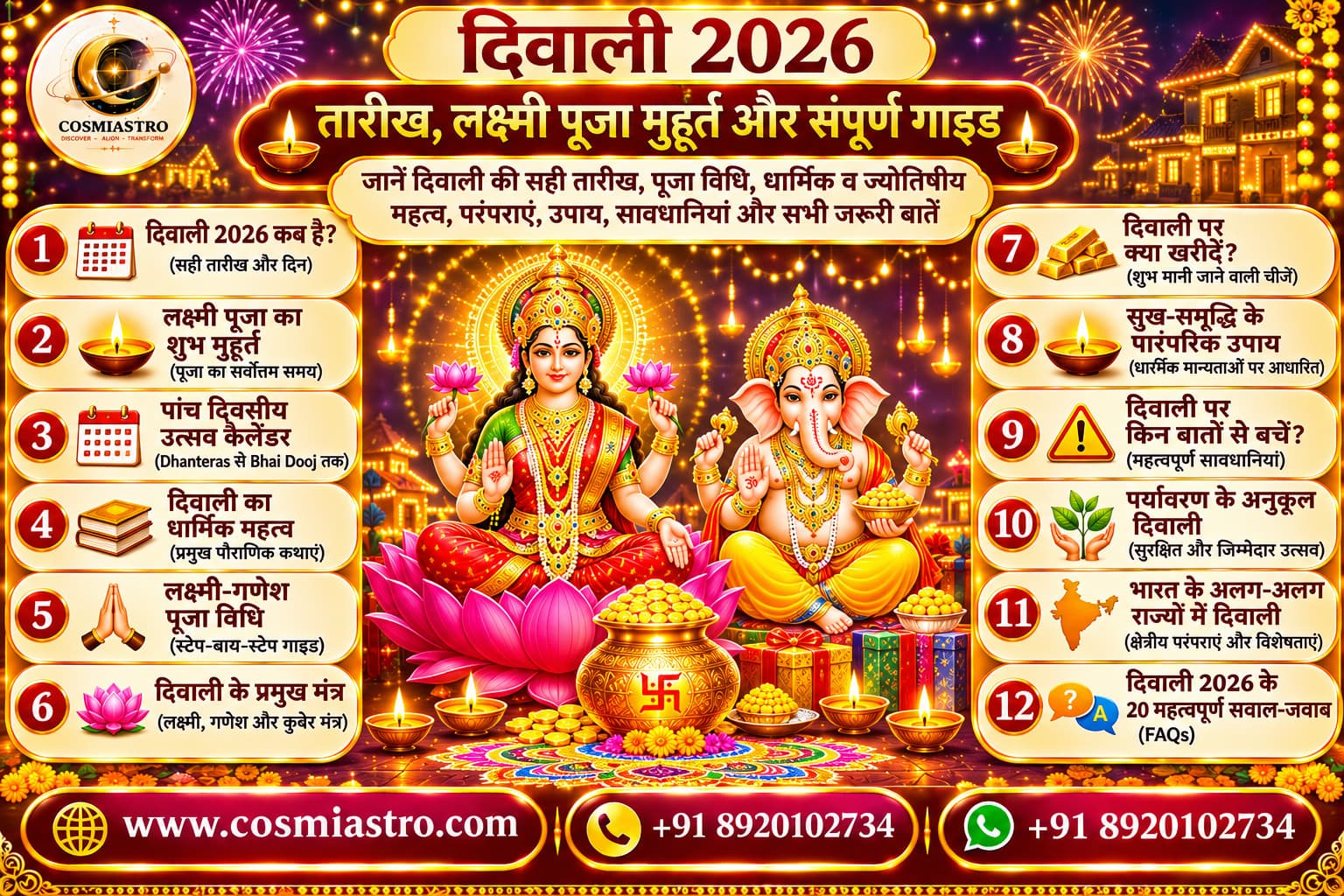
Diwali, also known as Deepavali, is one of the most celebrated and spiritually significant festivals in India. Popularly called the Festival of Lights, Diwali symbolizes the victory of light over darkness, knowledge over ignorance, and goodness over evil.
Every year, millions of families celebrate Diwali by decorating their homes, lighting traditional diyas, creating colorful rangoli, exchanging gifts, preparing sweets, and worshipping Goddess Lakshmi and Lord Ganesha.
However, Diwali is much more than a festival of lights and celebrations. It represents hope, gratitude, prosperity, family relationships, spiritual renewal, and the importance of making positive changes in life.
Many people want to know when Diwali will be celebrated in 2026, the correct Lakshmi Puja Muhurat, how to perform Diwali Puja at home, which mantras to chant, what to buy, and which traditions to follow.
In this comprehensive guide by Cosmiastro, you will discover everything important about Diwali 2026, including its date, auspicious timings, five-day festival calendar, mythology, Lakshmi Puja Vidhi, astrological significance, traditional remedies, regional celebrations, precautions, and frequently asked questions.
1. When Is Diwali 2026? Date, Day and Important Details
Diwali 2026 will be celebrated on Sunday, November 8, 2026, in India.
According to the Hindu lunar calendar, the main Diwali celebration and Lakshmi Puja take place during Amavasya, the new moon period.
Diwali 2026 Important Information
Diwali Date: Sunday, November 8, 2026
Festival Name: Diwali or Deepavali
Main Deities: Goddess Lakshmi and Lord Ganesha
Hindu Tithi: Amavasya
Main Ritual: Lakshmi-Ganesha Puja
Festival Significance: Light, prosperity, spiritual renewal, happiness, and family well-being
Diwali celebrations generally begin with Dhanteras and conclude with Bhai Dooj, although regional traditions may include additional observances.
2. Diwali 2026 Lakshmi Puja Shubh Muhurat
Performing Lakshmi Puja during an auspicious time is an important tradition in many Hindu households.
According to the New Delhi Panchang, the important timings for Diwali 2026 are:
Lakshmi Puja Date: November 8, 2026
Lakshmi Puja Muhurat: 5:54 PM to 7:50 PM
Pradosh Kaal: 5:31 PM to 8:09 PM
Vrishabha Kaal: 5:54 PM to 7:50 PM
Amavasya Tithi Begins: November 8, 2026, at 11:27 AM
Amavasya Tithi Ends: November 9, 2026, at 12:31 PM
All timings are in Indian Standard Time and apply to New Delhi.
The exact muhurat may vary depending on your location.
For accurate local timings, consult a reliable Panchang for your city before performing Lakshmi Puja.
Why Is Pradosh Kaal Important?
Pradosh Kaal refers to the period around sunset and early evening.
Many Diwali worship traditions consider this period auspicious for Goddess Lakshmi's worship.
Why Is Vrishabha Lagna Considered Auspicious?
In traditional astrology, Vrishabha, or Taurus, is a fixed zodiac sign.
Some Lakshmi Puja traditions prefer a fixed ascendant because it symbolically represents stability.
These associations are part of traditional astrological beliefs rather than scientifically established outcomes.
3. Diwali 2026 Five-Day Festival Calendar
Diwali is commonly described as a five-day festival. In 2026, however, the major observances extend across six calendar dates because of the lunar tithi timings.
Dhanteras: Friday, November 6, 2026
Kali Chaudas: Saturday, November 7, 2026, in traditions observing the midnight ritual
Naraka Chaturdashi: Sunday, November 8, 2026, for the traditional early-morning observance
Main Diwali and Lakshmi Puja: Sunday, November 8, 2026
Amavasya Observances: Monday, November 9, 2026
Govardhan Puja and Annakut: Tuesday, November 10, 2026
Bhai Dooj: Wednesday, November 11, 2026
Some popular festival calendars list Choti Diwali on November 7, while Panchang-based calculations place the Naraka Chaturdashi morning bath on November 8.
The distinction arises because different rituals are determined by different parts of the lunar day.
Families should follow their regional Panchang and established traditions.
4. Why Is Diwali Celebrated? History and Mythological Significance
Diwali is associated with several important stories from Hindu religious traditions.
Return of Lord Rama to Ayodhya
According to the Ramayana tradition, Lord Rama returned to Ayodhya with Goddess Sita and Lakshmana after completing fourteen years of exile and defeating Ravana.
People are traditionally believed to have welcomed their return by lighting lamps.
This story symbolizes the victory of righteousness, courage, and goodness.
Worship of Goddess Lakshmi
Diwali is closely associated with Goddess Lakshmi, the deity of wealth, prosperity, fortune, and abundance.
According to Hindu mythology, Goddess Lakshmi appeared during Samudra Manthan, the churning of the cosmic ocean.
Her worship represents the desire for prosperity, gratitude, and a harmonious household.
Lord Krishna and Narakasura
Another tradition connects Diwali celebrations with Lord Krishna's victory over Narakasura.
Naraka Chaturdashi commemorates the triumph over oppression and evil.
King Bali and Lord Vishnu
In some regional traditions, Diwali is associated with King Mahabali and Lord Vishnu's Vamana incarnation.
These stories emphasize humility, generosity, devotion, and the proper use of power.
5. Spiritual and Astrological Significance of Diwali
Diwali takes place around Amavasya, when the Moon is not visibly illuminated.
In traditional spiritual interpretations, the darkness of Amavasya symbolizes the importance of seeking inner light and wisdom.
Lighting diyas represents the removal of ignorance and the welcoming of hope.
Goddess Lakshmi is associated with abundance and prosperity.
Lord Ganesha represents wisdom, clarity, and auspicious beginnings.
Their combined worship reminds devotees that prosperity should be accompanied by intelligence and responsibility.
In some astrological traditions, Diwali is considered a meaningful occasion for prayer, meditation, charity, and reviewing one's financial habits.
However, no planetary arrangement or religious ritual guarantees wealth, business success, or debt elimination.
6. Diwali 2026 Lakshmi-Ganesha Puja Vidhi: Step-by-Step Guide
Lakshmi Puja is one of the most important rituals performed on Diwali evening.
Step 1: Clean and Prepare the Home
Clean your house and worship area before the festival.
Remove unnecessary clutter and organize important household items.
Step 2: Decorate the Entrance
Decorate the entrance with rangoli, flowers, and traditional lamps.
Many families also use torans made from flowers or leaves.
Step 3: Prepare the Puja Platform
Place a clean red or yellow cloth on a wooden platform.
Install idols or pictures of Goddess Lakshmi and Lord Ganesha.
Some families also worship Goddess Saraswati, Lord Kubera, or their family deity.
Step 4: Arrange Puja Materials
Common puja materials include flowers, kumkum, turmeric, rice, incense, fruits, sweets, a kalash, and diyas.
Use materials according to your family tradition.
Step 5: Begin With Lord Ganesha
Offer prayers to Lord Ganesha for wisdom and auspicious beginnings.
Step 6: Worship Goddess Lakshmi
Offer flowers, sweets, and other customary items to Goddess Lakshmi.
Pray for family happiness, prosperity, and responsible financial decisions.
Step 7: Chant Traditional Mantras
Recite appropriate prayers with devotion.
Step 8: Perform Aarti
Perform Lakshmi-Ganesha Aarti and express gratitude.
Step 9: Distribute Prasad
Share prasad with family members.
Step 10: Light Diyas Safely
Place diyas at appropriate locations around the home, ensuring proper fire safety.
The exact puja sequence may differ across households and religious traditions.
7. Important Diwali Mantras and Their Traditional Significance
Lord Ganesha Mantra
ॐ गं गणपतये नमः।
This mantra is traditionally associated with auspicious beginnings, wisdom, and prayers for overcoming obstacles.
Mahalakshmi Mantra
ॐ श्रीं महालक्ष्म्यै नमः।
This mantra invokes Goddess Mahalakshmi and is commonly recited during prayers for prosperity and household well-being.
Lord Kubera Mantra
ॐ यक्षाय कुबेराय वैश्रवणाय धनधान्याधिपतये धनधान्यसमृद्धिं मे देहि दापय स्वाहा॥
This mantra is associated with Lord Kubera, traditionally regarded as the guardian of wealth.
Devotees may chant these mantras 11, 21, or 108 times according to their customs.
No single repetition count is compulsory for every mantra or tradition.
8. What Should You Buy on Diwali 2026?
Buying new items during the Diwali season is a popular tradition.
Common purchases include gold, silver, utensils, clothes, household appliances, decorative items, and gifts.
Gold and Silver
Precious metals are traditionally associated with wealth and auspiciousness.
Utensils
Steel, copper, and brass utensils are popular festive purchases.
New Clothes
Wearing clean or new clothes symbolizes celebration and a fresh beginning.
Diyas and Puja Materials
Earthen lamps, flowers, and worship materials are important parts of traditional celebrations.
Household Essentials
Many families purchase useful household items according to their needs.
Important Advice
Avoid unnecessary borrowing or overspending merely because a purchase is considered auspicious.
A meaningful Diwali celebration does not require expensive shopping.
9. Traditional Diwali Remedies for Prosperity and Happiness
Several customary practices are associated with welcoming prosperity during Diwali.
Cleaning the Home
A clean and organized house symbolizes preparation for an auspicious beginning.
Lighting Diyas
Diyas represent light, hope, and the removal of darkness.
Worshipping Goddess Lakshmi
Lakshmi Puja expresses prayers for prosperity and gratitude.
Remembering Lord Ganesha
Ganesha worship represents wisdom and thoughtful beginnings.
Offering Charity
Donating food, clothing, or essential items to people in need reflects compassion and generosity.
Organizing Financial Records
Reviewing expenses, savings, and financial responsibilities can be a practical way to begin the new festive period.
These practices have religious, cultural, or practical significance. They should not be presented as guaranteed methods of increasing income.
10. What Should You Avoid on Diwali?
Diwali should be celebrated with care, respect, and financial responsibility.
Avoid unnecessary arguments and disrespectful behavior.
Do not spend beyond your financial capacity.
Avoid unsafe fireworks and careless handling of flames.
Keep diyas away from curtains, paper decorations, and flammable materials.
Never leave burning lamps unattended.
Do not force pets or animals to remain near loud fireworks.
Avoid excessive food waste and unnecessary plastic decorations.
Be cautious of people promising guaranteed financial success through expensive rituals.
Remember that many beliefs about auspicious and inauspicious activities differ by region and family.
11. Importance of Rangoli, Diyas, Decorations and Sweets
Rangoli
Rangoli is created using colors, flowers, rice flour, or other decorative materials.
It symbolizes hospitality, beauty, and festive joy.
Diyas
Traditional earthen lamps are among the most recognizable symbols of Diwali.
They represent light overcoming darkness.
Flowers and Torans
Floral decorations and entrance torans are used to welcome guests and create a festive atmosphere.
Sweets
Families prepare or exchange traditional sweets such as laddoo, barfi, peda, and other regional delicacies.
Gift Exchange
Giving gifts strengthens relationships and expresses appreciation.
The most meaningful gifts are those selected thoughtfully and within one's budget.
12. How Is Diwali Celebrated in Different Parts of India?
Diwali celebrations vary across India's regions and communities.
North India
Many families associate Diwali with Lord Rama's return to Ayodhya and perform Lakshmi-Ganesha Puja.
Gujarat
Diwali has special importance for business communities. The Gujarati New Year is traditionally celebrated around the Diwali period.
Maharashtra
Celebrations may include Vasubaras, Dhanteras, Naraka Chaturdashi, Lakshmi Pujan, Padwa, and Bhaubeej.
West Bengal
Kali Puja is an important observance associated with the Diwali period.
South India
In several southern traditions, Naraka Chaturdashi and early-morning oil baths hold special significance.
Sikh Tradition
Bandi Chhor Divas, associated with Guru Hargobind Sahib, is observed around Diwali.
Jain Tradition
Diwali commemorates the attainment of nirvana by Lord Mahavira.
These traditions demonstrate the cultural and religious diversity of the festival.
13. Eco-Friendly and Safe Diwali Celebration Ideas
Diwali can be celebrated beautifully while reducing environmental impact.
Choose reusable decorations and traditional earthen lamps where practical.
Use energy-efficient decorative lights.
Avoid excessive noise and smoke.
Keep water or appropriate fire-safety equipment accessible when using flames.
Supervise children around diyas and fireworks.
Consider the comfort of elderly people, infants, animals, and individuals with respiratory sensitivities.
Use flowers and decorations responsibly, and dispose of waste appropriately.
An environmentally conscious celebration can preserve the joy of Diwali while showing consideration for others.
14. Frequently Asked Questions About Diwali 2026 (FAQs)
Q1. When is Diwali in 2026?
Answer: Diwali will be celebrated on Sunday, November 8, 2026, in India.
Q2. What is the Lakshmi Puja Muhurat for Diwali 2026?
Answer: In New Delhi, the Lakshmi Puja Muhurat is approximately 5:54 PM to 7:50 PM on November 8, 2026.
Q3. Why is Diwali celebrated?
Answer: Diwali symbolizes the victory of light over darkness and is associated with several religious traditions, including Lord Rama's return to Ayodhya and Goddess Lakshmi's worship.
Q4. Which goddess is worshipped on Diwali?
Answer: Goddess Lakshmi is a principal deity worshipped during Diwali.
Q5. Why is Lord Ganesha worshipped with Goddess Lakshmi?
Answer: Lord Ganesha represents wisdom and auspicious beginnings, while Goddess Lakshmi represents prosperity.
Q6. What is the significance of lighting diyas?
Answer: Diyas symbolize hope, knowledge, spiritual light, and the removal of darkness.
Q7. Is buying gold compulsory on Diwali?
Answer: No. Gold purchases are traditional but not compulsory.
Q8. Can Diwali Puja be performed without a priest?
Answer: Yes. Many families perform simple Lakshmi-Ganesha Puja at home.
Q9. Which mantra should be chanted on Diwali?
Answer: Om Shreem Mahalakshmyai Namah is a popular Lakshmi mantra.
Q10. How many diyas should be lit on Diwali?
Answer: The number varies according to family tradition. There is no universal requirement applicable to every household.
Q11. What is the significance of Amavasya on Diwali?
Answer: Amavasya is the lunar period associated with the main Lakshmi Puja celebration.
Q12. When is Dhanteras 2026?
Answer: Dhanteras will be observed on Friday, November 6, 2026.
Q13. When is Govardhan Puja 2026?
Answer: Govardhan Puja will be observed on Tuesday, November 10, 2026, according to the New Delhi festival calendar.
Q14. When is Bhai Dooj 2026?
Answer: Bhai Dooj will be celebrated on Wednesday, November 11, 2026.
Q15. Why are homes cleaned before Diwali?
Answer: Cleaning represents preparation, renewal, hospitality, and the welcoming of auspiciousness.
Q16. Can Diwali rituals guarantee wealth?
Answer: No. Religious rituals do not guarantee financial results. Responsible financial planning remains important.
Q17. What foods are prepared during Diwali?
Answer: Popular festive foods include laddoo, barfi, namkeen, chakli, gujiya, and various regional specialties.
Q18. Why do people exchange gifts on Diwali?
Answer: Gift exchange expresses affection, gratitude, goodwill, and appreciation.
Q19. How can families celebrate an eco-friendly Diwali?
Answer: Families can use reusable decorations, limit noise and smoke, conserve resources, and dispose of waste responsibly.
Q20. How can I contact Cosmiastro for Diwali-related astrology guidance?
Answer: You can visit www.cosmiastro.com or contact Cosmiastro by phone or WhatsApp to enquire about available astrology consultations.
15. Celebrate Diwali 2026 With Cosmiastro
Diwali is an opportunity to welcome new beginnings, strengthen relationships, and reflect on the importance of prosperity, health, and spiritual balance.
If you are interested in traditional Vedic astrology, horoscope interpretation, planetary symbolism, Lakshmi Puja customs, or festival-related astrological guidance, you can contact Cosmiastro to learn about available consultation services.
16. Conclusion: Welcome Diwali 2026 With Light, Gratitude and Prosperity
Diwali 2026 will be celebrated on Sunday, November 8, bringing families together for one of India's most meaningful festivals.
From Dhanteras and Naraka Chaturdashi to Lakshmi Puja, Govardhan Puja, and Bhai Dooj, every observance carries a message of devotion, gratitude, responsibility, and human connection.
The worship of Goddess Lakshmi encourages appreciation for prosperity.
Lord Ganesha's worship reminds devotees of the importance of wisdom.
The lighting of diyas symbolizes hope and the triumph of light over darkness.
Charity, gift exchange, and family gatherings strengthen relationships and promote generosity.
Diwali also offers a valuable opportunity to review personal goals, improve financial habits, care for loved ones, and begin the coming year with a positive outlook.
Celebrate this Diwali with faith, kindness, environmental awareness, and responsible choices.
May Goddess Lakshmi bless your home with prosperity, Lord Ganesha inspire wisdom, and the light of Diwali bring peace, happiness, and hope to your family.
Cosmiastro wishes you and your loved ones a very Happy Diwali 2026!
Disclaimer: This article is intended for cultural, religious, and general informational purposes. Astrological interpretations and traditional remedies are based on belief systems and do not guarantee wealth, business success, health outcomes, or other specific results. Consult qualified professionals for financial, medical, or legal advice.