Diwali Vastu Tips: 21 Important Vastu Tips for Wealth, Prosperity, Positive Energy and a Happy Home
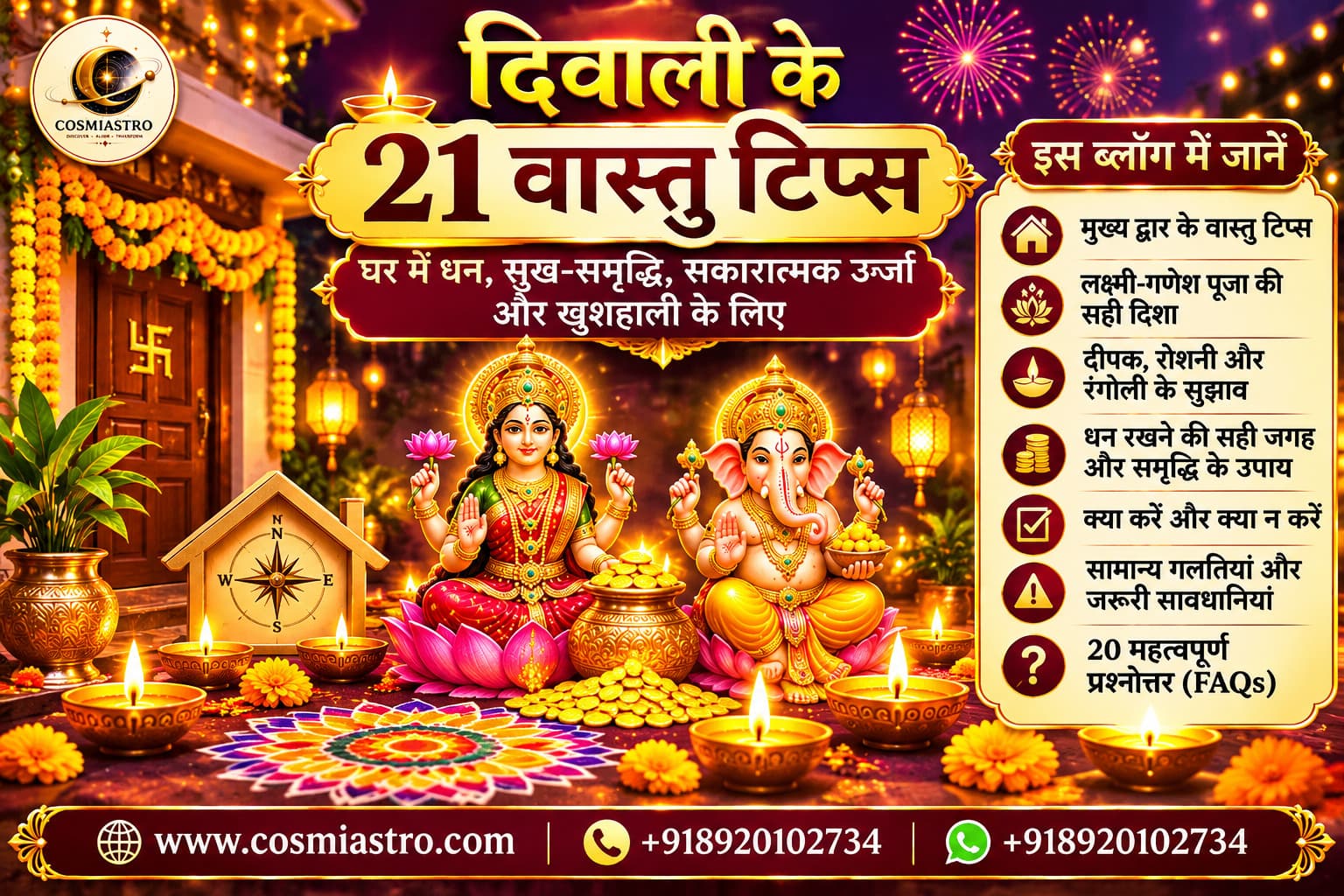
Diwali is one of the most beloved festivals in India, celebrated with glowing diyas, colorful rangoli, beautiful decorations, sweets, family gatherings, and prayers to Goddess Lakshmi and Lord Ganesha. Beyond the festive atmosphere, Diwali carries a deeper message of cleanliness, gratitude, wisdom, harmony, and new beginnings.
Many families also follow Vastu Shastra traditions while preparing their homes for Diwali.
Vastu Shastra is a traditional Indian system of architectural and spatial principles. It considers the arrangement of rooms, entrances, directions, natural light, ventilation, and household objects. Within traditional Vastu beliefs, these features are associated with balance, auspiciousness, and positive energy.
Diwali provides an opportunity to review the condition and arrangement of your living space.
But what are the best Diwali Vastu tips? Which direction is considered auspicious for Lakshmi Puja? Where should diyas be placed? How should you decorate your main entrance? What should you avoid during Diwali cleaning? Can Vastu principles be followed in a small apartment or rented house?
In this comprehensive Cosmiastro guide, we explain 21 important Diwali Vastu tips, their traditional significance, practical applications, common mistakes, safety precautions, and frequently asked questions.
These recommendations describe traditional beliefs and optional household practices. Vastu principles have not been scientifically established as methods for attracting wealth, changing luck, or guaranteeing prosperity. You can appreciate their cultural meaning while making home decisions based on comfort, accessibility, safety, and sound financial judgment.
1. What Is the Significance of Vastu Shastra During Diwali?
Vastu Shastra is traditionally concerned with the relationship between a building, its surroundings, and the way people use its spaces.
Different schools of Vastu describe directional associations and preferred arrangements for entrances, worship areas, kitchens, bedrooms, and storage.
During Diwali, families often pay particular attention to the entrance, prayer area, lighting, and cleanliness of the home.
The festival is closely associated with Goddess Lakshmi, who symbolizes prosperity and abundance, and Lord Ganesha, who represents wisdom and auspicious beginnings.
In popular tradition, a clean and welcoming home is considered a symbolic invitation to Goddess Lakshmi.
Similarly, illuminating dark spaces with diyas represents the victory of light over darkness.
From a practical perspective, many Diwali preparations also offer everyday benefits.
Removing clutter makes rooms easier to use.
Cleaning improves hygiene.
Repairing broken fixtures can improve safety.
Proper lighting makes entrances and walkways more welcoming.
Thoughtful decoration can create a pleasant atmosphere for family members and guests.
The most meaningful approach is to combine respect for tradition with practical home care.
2. Diwali 2026 Date and Vastu Preparation
In India, the main Diwali celebration in 2026 falls on Sunday, November 8.
Families often begin cleaning, organizing, shopping, and decorating several days before the festival.
You can divide your preparations into manageable stages rather than attempting everything on Diwali itself.
Begin by identifying areas that need attention, such as the entrance, kitchen, prayer space, living room, and storage areas.
Check electrical decorations and repair unsafe fixtures.
Plan where diyas will be placed and make sure the chosen surfaces are stable.
Prepare the puja area before the evening worship ceremony.
The exact Lakshmi Puja muhurat depends on your location and local Panchang calculations. Check a reliable Panchang for your city if you intend to follow a specific auspicious time.
3. Twenty-One Important Diwali Vastu Tips for Your Home
Diwali Vastu Tip 1: Keep the Main Entrance Clean and Welcoming
The main entrance is one of the most important areas in popular Vastu traditions.
It represents the transition between the outside world and the home.
Before Diwali, clean the entrance thoroughly.
Remove unnecessary shoes, empty boxes, broken objects, and other clutter that blocks movement.
Wipe the door, handle, doorbell, and surrounding surfaces.
If you have a nameplate, make sure it is clean and clearly visible.
Traditional Belief
A clean and welcoming entrance is associated with auspiciousness and the symbolic arrival of Goddess Lakshmi.
Practical Benefit
A tidy entrance improves accessibility, appearance, and safety.
Important Precaution
Do not place decorations where they obstruct the doorway or emergency exit.
Diwali Vastu Tip 2: Decorate the Entrance With Rangoli
Rangoli is a beautiful part of Diwali celebrations.
Traditional designs often include flowers, geometric patterns, diyas, lotus motifs, and auspicious symbols.
Many families create rangoli near the main entrance as a gesture of welcome.
You can use flower petals, reusable decorations, or suitable rangoli colors.
Traditional Belief
Rangoli symbolizes hospitality, celebration, and auspicious beginnings.
Practical Benefit
It creates a festive atmosphere and provides an opportunity for family creativity.
Important Precaution
Avoid slippery materials and keep designs away from areas where people may trip.
Diwali Vastu Tip 3: Use Torans and Festive Door Decorations
Decorating the doorway with a toran is a common Diwali tradition.
Families may use marigold flowers, mango leaves, fabric decorations, or reusable ornamental garlands.
Traditional Belief
Torans are associated with welcoming positive influences and celebrating auspicious occasions.
Practical Benefit
They make the entrance more inviting.
Important Precaution
Secure decorations properly and keep them away from exposed flames and electrical fixtures.
Diwali Vastu Tip 4: Pay Attention to the Northeast Area
In many Vastu traditions, the northeast direction is called Ishanya and is associated with worship and spiritual activities.
Some households prefer to locate their prayer area in this part of the home.
If the northeast area is available and suitable, you may consider using it for prayer.
However, not every home has a northeast room or an ideal directional layout.
Traditional Belief
The northeast is often considered favorable for meditation and worship.
Practical Benefit
A dedicated quiet area can support concentration and regular prayer.
Important Precaution
Do not move heavy furniture or compromise the safety of your home merely to follow a directional preference.
Diwali Vastu Tip 5: Prepare a Clean Lakshmi-Ganesha Puja Area
The worship space deserves special attention during Diwali.
Clean the altar, chowki, and nearby surfaces.
Use a stable platform and a clean cloth.
Arrange the images or idols of Goddess Lakshmi and Lord Ganesha according to your family's religious tradition.
Traditional Belief
A clean worship area symbolizes reverence and readiness for divine blessings.
Practical Benefit
An organized altar makes worship easier and reduces unnecessary movement during the ceremony.
Important Precaution
Keep diyas away from curtains, loose fabrics, and flammable decorations.
Diwali Vastu Tip 6: Choose the Puja Direction Thoughtfully
Many Vastu guides suggest north or east-facing arrangements for household worship, while some traditions emphasize the northeast location.
However, specific preferences can differ.
There is no single arrangement followed by every Hindu family.
If your existing prayer space is clean, comfortable, and safe, you do not need to make disruptive changes because of a generalized online rule.
Traditional Belief
Certain directions are regarded as auspicious for prayer and meditation.
Practical Benefit
A comfortable worship arrangement helps family members participate without crowding.
Important Precaution
Never position the altar where lamps may fall or block a passage.
Diwali Vastu Tip 7: Light Diyas at Safe and Meaningful Locations
Diyas are among the most recognizable symbols of Diwali.
Many households place them near the entrance, windows, balconies, and prayer area.
In Vastu-related traditions, light is often associated with positivity and auspiciousness.
Traditional Belief
Lighting diyas symbolizes dispelling darkness and welcoming auspiciousness.
Practical Benefit
Decorative lighting creates warmth and a festive environment.
Important Precaution
Use stable, nonflammable surfaces and never leave burning diyas unattended.
Diwali Vastu Tip 8: Keep the Home Bright and Well Lit
Diwali is known as the Festival of Lights.
Many people decorate their homes with lamps, lanterns, and electric lights.
Pay particular attention to entrances, staircases, corridors, and other frequently used spaces.
Traditional Belief
Bright spaces symbolize clarity, hope, and positive energy.
Practical Benefit
Appropriate lighting improves visibility and helps prevent accidents.
Important Precaution
Avoid damaged wires, overloaded sockets, and unsafe extension connections.
Diwali Vastu Tip 9: Remove Unnecessary Clutter
Decluttering is one of the most practical Diwali preparations.
Check cupboards, drawers, shelves, and storage areas.
Separate belongings into items to keep, repair, donate, recycle, or dispose of responsibly.
Traditional Belief
Unnecessary clutter is often associated with stagnant energy in popular Vastu interpretations.
Practical Benefit
Decluttering creates usable space and makes household management easier.
Important Precaution
Do not discard essential documents, functional items, or sentimental belongings impulsively.
Diwali Vastu Tip 10: Repair Broken Household Fixtures
Before Diwali, inspect doors, windows, taps, switches, and furniture.
Repair loose handles, damaged locks, leaking taps, and unsafe fixtures where possible.
Traditional Belief
A well-maintained home is associated with balance and auspiciousness.
Practical Benefit
Repairs can prevent accidents, reduce water waste, and improve everyday comfort.
Important Precaution
Electrical repairs should be performed by qualified professionals.
Diwali Vastu Tip 11: Keep the Kitchen Clean and Organized
The kitchen is an important part of every home.
In some Vastu traditions, the southeast direction is associated with the fire element and is considered suitable for kitchen placement.
However, the location of an existing kitchen may not be easy or sensible to change.
Instead, focus on cleanliness and safe cooking practices.
Traditional Belief
A well-maintained kitchen is associated with nourishment and household well-being.
Practical Benefit
Good hygiene and organization make food preparation safer.
Important Precaution
Keep cooking areas free from clutter and store flammable materials away from heat.
Diwali Vastu Tip 12: Organize Your Money and Important Documents
Diwali is associated with prosperity and financial reflection.
Some Vastu traditions suggest particular directions for storing valuables, but recommendations vary among practitioners.
A more practical priority is secure storage.
Organize bank documents, insurance papers, identification records, and other important belongings.
Traditional Belief
Keeping wealth-related items organized symbolizes respect for available resources.
Practical Benefit
Secure document storage and financial organization can reduce avoidable problems.
Important Precaution
Do not relocate cash, jewelry, or sensitive documents to an insecure location simply to follow a directional recommendation.
Diwali Vastu Tip 13: Use Auspicious Colors Mindfully
Red, yellow, gold, orange, and green are frequently used in Diwali decorations.
Different traditions associate these colors with joy, auspiciousness, prosperity, and celebration.
You may incorporate them through flowers, cushions, rangoli, tablecloths, or decorative accessories.
Traditional Belief
Festive colors symbolize happiness, vitality, and auspiciousness.
Practical Benefit
A coordinated color scheme can make a space feel welcoming.
Important Precaution
There is no need to repaint your home or make expensive purchases solely for Diwali.
Diwali Vastu Tip 14: Decorate With Fresh Flowers
Fresh flowers are commonly used during Diwali worship and decoration.
Marigolds, roses, and lotus flowers are among the flowers associated with festive rituals.
Choose flowers that are locally available and suitable for your tradition.
Traditional Belief
Flowers symbolize beauty, purity, devotion, and auspiciousness.
Practical Benefit
They add natural color and fragrance to the home.
Important Precaution
Remove decaying flowers promptly and avoid arrangements that trigger allergies.
Diwali Vastu Tip 15: Consider Traditional Lakshmi Footprint Decorations
Some families decorate the entrance with symbolic footprints of Goddess Lakshmi.
These designs are traditionally associated with welcoming the goddess into the home.
You can use rangoli, washable floor decorations, or reusable motifs.
Traditional Belief
Lakshmi footprints represent a symbolic invitation to prosperity and auspiciousness.
Practical Benefit
They connect home decoration with cultural storytelling.
Important Precaution
Choose materials that do not make floors slippery.
Diwali Vastu Tip 16: Keep the Living Room Comfortable and Uncluttered
The living room is often where families welcome guests and spend time together during Diwali.
Arrange furniture so that people can move easily.
Keep decorations away from walkways.
Provide suitable seating for older adults and guests with mobility needs.
Traditional Belief
A balanced and welcoming gathering space is associated with family harmony.
Practical Benefit
Good furniture arrangement improves comfort and accessibility.
Important Precaution
Avoid blocking exits or placing lamps where they can be knocked over.
Diwali Vastu Tip 17: Pay Attention to Windows and Ventilation
Fresh air and appropriate ventilation contribute to a comfortable indoor environment.
Before Diwali, clean accessible windows and check whether ventilation systems are functioning properly.
Traditional Belief
Open and airy spaces are often associated with freshness and positive energy.
Practical Benefit
Ventilation can help reduce indoor smoke and improve comfort.
Important Precaution
Avoid excessive incense and never assume an open window makes indoor fire or smoke exposure harmless.
Diwali Vastu Tip 18: Keep the Bedroom Peaceful
Festive preparations can make the entire home busy and noisy.
Keep bedrooms relatively calm, clean, and comfortable.
Avoid placing flashing decorations or open flames near sleeping areas.
Traditional Belief
A peaceful bedroom is associated with balance and restful living.
Practical Benefit
A comfortable sleeping environment supports relaxation.
Important Precaution
Switch off unnecessary electrical decorations before sleeping.
Diwali Vastu Tip 19: Practice Responsible Water Use
Water is associated with purity and renewal in many cultural traditions.
During Diwali cleaning, use water responsibly.
Repair leaking taps and avoid unnecessary wastage.
Traditional Belief
Clean and well-maintained water-related spaces symbolize care and balance.
Practical Benefit
Water conservation helps reduce household expenses and environmental impact.
Important Precaution
Do not use excessive water near electrical decorations or sockets.
Diwali Vastu Tip 20: Include Charity and Gratitude in Your Celebration
Diwali is a suitable occasion to reflect on generosity.
Consider donating useful items, supporting community initiatives, or helping someone in need.
Traditional Belief
Generosity and gratitude are widely associated with auspicious living.
Practical Benefit
Charitable actions can strengthen social connections and support vulnerable people.
Important Precaution
Donate within your means and use trustworthy organizations or direct community channels.
Diwali Vastu Tip 21: Combine Traditional Practices With Financial Discipline
Diwali is closely associated with prayers for prosperity.
You can honor this symbolism by reviewing your financial habits.
Set realistic savings goals.
Identify unnecessary expenses.
Plan festival purchases.
Review household maintenance needs.
Traditional Belief
Prosperity is often understood as a combination of abundance, wisdom, and responsible conduct.
Practical Benefit
Budgeting and planning can support greater financial stability.
Important Precaution
Avoid claims that a particular Vastu object, direction, or ritual guarantees financial success.
4. Diwali Vastu Tips for the Main Entrance
The main entrance receives special attention in many Vastu traditions.
To prepare it for Diwali, begin with a thorough cleaning.
Remove obstacles and ensure that the door opens and closes properly.
Decorate with a suitable toran or festive garland.
Create rangoli where it will not obstruct movement.
Use appropriate lighting to improve visibility.
If you place diyas near the entrance, keep them away from footwear, fabric decorations, and crowded walking paths.
Some Vastu practitioners prefer specific entrance directions, but the direction of an existing entrance does not determine your financial future.
There is no need for expensive structural alterations based solely on such claims.
5. Diwali Vastu Tips for Lakshmi Puja
Lakshmi-Ganesha Puja is an important part of Diwali in many households.
Begin by cleaning the worship space.
Choose a stable altar and arrange the deities according to family customs.
Keep flowers, fruits, sweets, water, and other suitable offerings nearby.
Many Vastu traditions prefer the northeast for a worship area, but this is not a universal requirement.
For the puja timing, consult a reliable local Panchang.
Begin with prayers to Lord Ganesha if this is part of your tradition.
Continue with Goddess Lakshmi's worship, devotional mantras, and aarti.
After the ceremony, distribute prasad and secure all open flames.
The purpose of the puja is devotional expression rather than a guarantee of material wealth.
6. Diwali Vastu Tips for Wealth and Prosperity
Goddess Lakshmi is traditionally associated with wealth and abundance.
For this reason, Diwali Vastu discussions often include cash storage, lockers, money plants, mirrors, and wealth-related symbols.
Different practitioners recommend different arrangements, and some suggestions contradict one another.
It is important not to confuse a traditional symbolic preference with a proven financial method.
Instead of spending heavily on decorative remedies, consider practical habits that can improve financial management.
Review your monthly expenses.
Keep financial documents secure.
Plan an emergency fund.
Avoid unnecessary borrowing.
Maintain a record of important payments.
Consider charitable giving within your budget.
A decorative object may have personal or cultural meaning, but it should not replace responsible financial decisions.
7. Diwali Vastu Tips for Small Apartments and Rented Homes
You do not need a large house to follow meaningful Diwali traditions.
In a small apartment, focus on the areas you can maintain easily.
Clean the entrance and living space.
Use a compact and stable worship platform.
Choose reusable decorations.
Place diyas only where they can be supervised safely.
Use electric lights appropriately, without overloading sockets.
If the northeast area is unavailable, select another clean and suitable place for prayer.
In a rented home, avoid structural changes that violate your lease or create unnecessary expense.
The quality of your celebration does not depend on the size, ownership, or direction of your home.
8. Common Diwali Vastu Mistakes to Avoid
Mistake 1: Treating Every Vastu Rule as Universal
Vastu interpretations differ. Do not assume that every online recommendation applies to every home.
Mistake 2: Making Expensive Structural Changes Without a Practical Reason
Changing doors, walls, or room layouts can be costly. Consider safety, building regulations, professional advice, and actual household needs first.
Mistake 3: Blocking Entrances With Decorations
An attractive entrance should still allow safe movement.
Mistake 4: Placing Diyas Near Flammable Objects
Keep open flames away from curtains, papers, fabrics, and electrical wiring.
Mistake 5: Believing Decorative Objects Guarantee Wealth
There is no scientific evidence that particular Vastu items produce financial gains.
Mistake 6: Ignoring Electrical Safety
Check festive lights before use and avoid overloaded sockets.
Mistake 7: Overspending on Vastu Remedies
Simple cleaning, organization, and meaningful decoration can be enough.
Mistake 8: Forgetting Family Comfort
A home should remain accessible, comfortable, and suitable for everyone who lives there.
Mistake 9: Neglecting Ventilation
Excessive incense and indoor smoke can irritate the respiratory system.
Mistake 10: Allowing Fear to Replace Celebration
Diwali should encourage hope and togetherness, not anxiety about unavoidable architectural features.
9. Diwali Vastu Dos and Don'ts: Quick Checklist
Important Dos
Keep the entrance clean and accessible.
Prepare the prayer area before Lakshmi Puja.
Use safe lighting and stable diya holders.
Organize household belongings.
Repair unsafe fixtures.
Keep the kitchen hygienic.
Maintain proper ventilation.
Use decorations that fit your space and budget.
Include family members in preparations.
Practice gratitude and responsible spending.
Important Don'ts
Do not block doorways.
Do not leave burning diyas unattended.
Do not overload electrical sockets.
Do not make expensive structural changes based on fear.
Do not place valuable belongings in insecure locations.
Do not assume Vastu guarantees wealth.
Do not use excessive incense in enclosed rooms.
Do not ignore children, older adults, or pets.
Do not discard useful belongings unnecessarily.
Do not turn religious traditions into a source of stress.
10. Frequently Asked Questions About Diwali Vastu Tips (FAQs)
Q1. What are the most important Diwali Vastu tips?
Answer: Common recommendations include keeping the entrance clean, preparing a peaceful puja area, using suitable lighting, organizing belongings, and celebrating safely.
Q2. Which direction is best for Lakshmi Puja on Diwali?
Answer: Many Vastu traditions favor the northeast for a worship area, while some suggest north or east-facing arrangements. Follow your family's custom and prioritize safety.
Q3. Is a northeast puja room compulsory?
Answer: No. Many families perform meaningful worship in other suitable areas of their homes.
Q4. How should we decorate the main entrance for Diwali?
Answer: Clean the entrance, add suitable lighting, and consider rangoli or a toran without blocking movement.
Q5. Where should diyas be placed according to Vastu?
Answer: Some traditions favor entrances and worship spaces. Regardless of direction, place diyas on stable, nonflammable surfaces and supervise them.
Q6. Can Vastu tips attract money?
Answer: Vastu practices have cultural and religious significance, but they do not scientifically guarantee financial gains.
Q7. Which colors are considered auspicious for Diwali decoration?
Answer: Red, yellow, gold, orange, and green are commonly associated with festive auspiciousness.
Q8. Should we remove broken items before Diwali?
Answer: Repair or responsibly dispose of unsafe and unusable items. There is no need to discard useful belongings because of fear.
Q9. Is it necessary to buy a Vastu item for Diwali?
Answer: No. Special decorative products are not compulsory for meaningful celebration or worship.
Q10. Can we follow Diwali Vastu tips in a rented house?
Answer: Yes. Cleaning, organization, safe lighting, and simple decorations can be practiced without structural changes.
Q11. What if my main entrance faces an unfavorable direction according to a Vastu guide?
Answer: You do not need to assume that your home's direction causes misfortune. Focus on practical improvements and avoid fear-based spending.
Q12. Is rangoli necessary for Diwali Vastu?
Answer: No. Rangoli is a popular festive decoration, not a universal requirement.
Q13. Can we perform Lakshmi Puja in a small apartment?
Answer: Yes. A clean, safe, compact worship area is sufficient for many household traditions.
Q14. Should diyas remain lit throughout the night?
Answer: Never leave open flames unattended. Fire safety is more important than keeping lamps burning overnight.
Q15. Is a money plant necessary for Diwali prosperity?
Answer: No. Plants may be used for decoration, but no plant guarantees financial prosperity.
Q16. Should mirrors be moved before Diwali?
Answer: Some Vastu traditions discuss mirror placement, but there is no need to move mirrors without a practical reason.
Q17. What should we do with old Diwali decorations?
Answer: Reuse items in good condition, repair suitable decorations, and recycle or dispose of damaged items responsibly.
Q18. Can Diwali Vastu tips improve family harmony?
Answer: Cleaning, shared preparations, and comfortable spaces may support a pleasant home environment. Vastu itself does not guarantee relationship outcomes.
Q19. What is the biggest Diwali Vastu mistake?
Answer: One significant mistake is prioritizing unverified claims over household safety, financial responsibility, and family comfort.
Q20. Where can I get more information about Diwali Vastu and astrology?
Answer: Visit www.cosmiastro.com or contact Cosmiastro by phone or WhatsApp to enquire about available traditional astrology and Vastu guidance.
11. Explore Diwali Vastu and Astrology Guidance With Cosmiastro
Diwali is a meaningful occasion to bring greater attention to your home, family relationships, spiritual practices, and financial habits.
Traditional Vastu principles may provide cultural inspiration for arranging and decorating your space, while practical home improvements can make everyday life more comfortable and organized.
If you are interested in traditional Vastu concepts, Vedic astrology, horoscope interpretation, Lakshmi-Ganesha Puja, festival customs, or related guidance, you can contact Cosmiastro.
12. Conclusion: Welcome Diwali With Light, Harmony and Responsible Prosperity
Diwali Vastu tips are often associated with creating a welcoming, organized, and auspicious home.
The 21 recommendations discussed in this guide cover the entrance, prayer area, lighting, rangoli, kitchen, bedrooms, ventilation, financial organization, and family well-being.
Some practices come from traditional directional beliefs.
Others offer straightforward practical benefits, such as improved cleanliness, better accessibility, safer lighting, and more organized living spaces.
You do not need expensive decorations, structural renovations, or special Vastu products to celebrate Diwali meaningfully.
Clean your home thoughtfully.
Prepare your worship space with devotion.
Decorate within your budget.
Keep diyas and electrical lights safe.
Respect family traditions without allowing fear-based claims to influence major decisions.
Remember that prosperity is not only about money. It also includes wisdom, gratitude, supportive relationships, responsible choices, and a peaceful living environment.
May the light of Diwali inspire happiness, knowledge, harmony, and positive new beginnings for you and your loved ones.
Cosmiastro wishes you and your family a Happy, Safe and Prosperous Diwali!
Disclaimer: This article describes traditional Vastu beliefs, Hindu festival customs, and general household safety suggestions for educational purposes. Vastu practices are not scientifically established methods for guaranteeing wealth, health, luck, or relationship outcomes. Interpretations vary among traditions and practitioners. Consult qualified professionals for structural, electrical, financial, or other specialized decisions.